I can’t believe the incredible benefits fasting can have on our bodies! Did you know that fasting might increase your HGH levels?
Human Growth Hormone (HGH) is responsible for muscle growth, fat burning, and overall well-being. This article will explore the scientific evidence behind the relationship between fasting and HGH production.
Get ready to be amazed by the potential impact of fasting on your body’s natural HGH levels.
Key points
- Fasting, particularly intermittent fasting, can increase growth hormone secretion in the body.
- Increased HGH levels during fasting promote fat loss and muscle gain, improving metabolic health.
- Fasting-induced HGH secretion stimulates cellular repair processes, reducing inflammation in the body.
- Elevated HGH levels during fasting enhance brain function and improve overall well-being.
I’ve expanded on this topic further down in the post, so feel free to keep reading and let me know your thoughts!
The Relationship Between Fasting and HGH
The relationship between fasting and HGH is significant. Numerous studies have shown that fasting, particularly intermittent fasting, can increase growth hormone secretion in the body.
According to landmark research published in [Journal of Clinical Investigation, 1988], fasting dramatically enhances growth hormone secretion in humans. The study examined GH secretion patterns in six healthy adult men during a control fed day and during days 1 and 5 of a 5-day fast. Results showed that 24-hour fasting increased GH concentrations from 0.8 ± 0.1 ng/mL to 5.1 ± 1.0 ng/mL (p < 0.005), representing an approximately 6-fold increase. The enhancement was achieved through combined frequency modulation (increased discrete pulses) and amplitude modulation (enhanced sinusoidal periodicities), demonstrating that fasting triggers significant alterations in somatotropic hormone release.
This increase in HGH levels has several positive effects on our overall health and well-being. Firstly, it helps improve metabolic health by promoting fat loss and muscle gain. Elevated HGH levels during fasting stimulate cellular repair processes, reducing inflammation. It can positively impact various aspects of our health, including brain function.
Research documenting water-only fasting effects published in [Frontiers in Endocrinology, 2024] demonstrated weight loss-independent increases in HGH during fasting. A 24-hour water-only fast increased HGH by approximately 5-fold in males and 14-fold in females. The study found that HGH increases occurred independent of weight loss and that basal HGH and fasting-induced HGH changes correlated inversely with cardiometabolic risk factors, suggesting that fasting-induced HGH elevation provides metabolic benefits beyond simple weight reduction.
Furthermore, the anti-aging benefits of fasting-induced HGH secretion are well-documented. Fasting can effectively increase HGH levels, leading to various health benefits, such as improved metabolic health, muscle gain, fat loss, cellular repair, reduced inflammation, enhanced brain function, and anti-aging effects.
The Science Behind Fasting and Growth Hormone
One can understand the science behind fasting and growth hormones by examining the physiological processes that occur in the body during fasting.
Fasting triggers a state of autophagy, where the body starts to recycle and repair damaged cells. This process is believed to stimulate the production of growth hormone. Additionally, fasting promotes ketosis, a metabolic state where the body relies on fat for energy instead of glucose. This switch in fuel source can enhance blood sugar regulation and improve overall metabolism.
Research on fasting-induced lipolysis published in [Nutrients, 2022] demonstrates that the increase in growth hormone secretion during prolonged fasting directly stimulates lipolytic rate, augmenting mobilization of endogenous energy stores when external fuel availability is very low. The study identified that pulsatile GH secretion patterns are specifically responsible for stimulating fat mobilization during fasting states, connecting the physiological changes in GH secretory patterns directly to increased fat burning efficiency.
Studies also suggest fasting may improve sleep quality and reduce cortisol levels, a stress hormone that can negatively impact growth hormone production. While more research is needed, evidence suggests that extended fasting may promote longevity and increase protein synthesis, leading to potential growth hormone benefits.
| Physiological Processes | Effects on Growth Hormone |
|---|---|
| Autophagy | Stimulates production |
| Ketosis | Enhances blood sugar regulation |
| Metabolism | Positive impact on overall metabolism |
| Sleep quality | Potential improvement |
| Cortisol | Reduction in stress hormone levels |
Understanding Autophagy and Its Connection to HGH

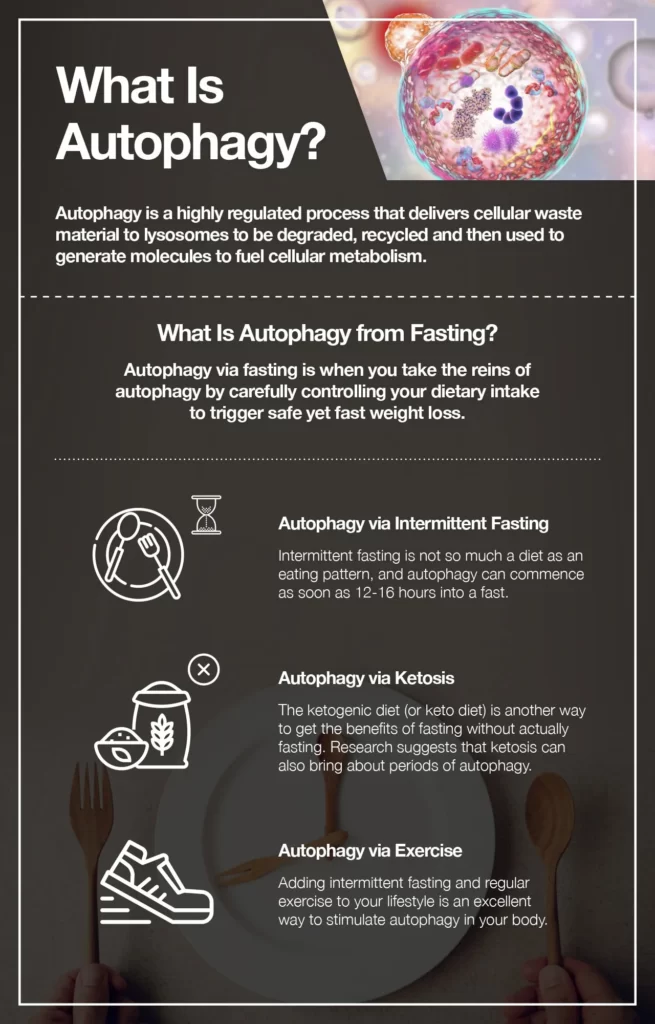
Autophagy refers to the process by which cells break down and recycle their damaged or unnecessary components. It has been found to have a strong connection with HGH levels, as autophagy helps regulate the secretion and function of growth hormones.
Understanding the relationship between autophagy and HGH can provide insight into the mechanisms behind the positive effects of fasting on our overall health and well-being.
Autophagy and HGH Synergy
Autophagy is a cellular process that removes damaged or dysfunctional components, such as mitochondria, through mitophagy. This process is essential for maintaining cellular health and preventing the accumulation of harmful substances.
Research on short-term fasting-induced neuronal autophagy published in [PNAS, 2010] demonstrated that short-term fasting leads to a dramatic upregulation in neuronal autophagy. The study showed increased autophagosome abundance and characteristics, with diminished neuronal mTOR activity revealed by reduction in phosphorylated S6 ribosomal protein in Purkinje cells. The researchers concluded that sporadic fasting might represent “a simple, safe and inexpensive means to promote this potentially therapeutic neuronal response,” suggesting significant neuroprotective and cellular renewal benefits.
HGH, or human growth hormone, is crucial in various physiological processes, including weight loss, fat burning, immune function, cancer prevention, brain health, and protection against neurodegenerative diseases.
The synergy between autophagy and HGH can enhance cellular renewal and improve metabolic flexibility. This synergy may profoundly affect overall health and well-being by promoting the removal of damaged components and stimulating cellular growth.
Further research is needed to fully understand this synergistic effect’s mechanisms and potential therapeutic applications.
 Benefits of Fasting-Induced Autophagy
 Benefits of Fasting-Induced Autophagy
The synergy between fasting-induced autophagy and HGH levels significantly benefits cellular renewal and overall health.
Fasting triggers autophagy, leading to improved insulin sensitivity and reduced insulin levels, critical factors preventing insulin resistance and maintaining beta cell function. It, in turn, can help prevent diabetes and improve metabolic health.
A meta-analysis of intermittent fasting interventions published in [Nutrients, 2022] found significant improvements in glucose and lipid metabolism markers after intermittent fasting diet intervention. Fasting blood glucose reduced by 0.15 mmol/L (95% CI: −0.23; −0.06), glycosylated hemoglobin reduced by 0.08 (95% CIs: −0.25; −0.10), insulin plasma levels reduced by 13.25 uUI (95% CIs: −16.69; −9.82), and HOMA-IR decreased by 0.31 on average (95% CIs: −0.44; −0.19). Additionally, BMI decreased by 0.8 kg/m², body weight reduced by 1.87 kg, and waist circumference decreased by 2.08 cm, demonstrating multiple metabolic benefits independent of weight loss alone.
Autophagy has also been linked to preventing neurodegenerative diseases, as it clears out misfolded proteins and damaged mitochondria that contribute to their development. Additionally, autophagy promotes strength training adaptations by clearing out damaged muscle cells and stimulating the production of new ones. It also plays a role in collagen production, aiding injury recovery and promoting healthy skin.
Furthermore, autophagy has been associated with improved cardiovascular health by reducing inflammation and oxidative stress. Fasting-induced autophagy has far-reaching benefits extending beyond HGH levels, making it a valuable practice for maintaining optimal health.
Activating Autophagy for HGH Boost
To boost HGH levels, I activate autophagy through fasting. Autophagy is the process by which the body breaks down and recycles damaged or dysfunctional cellular components. By activating autophagy, I can enhance the production of HGH, a hormone that plays a crucial role in various physiological processes.
Fasting triggers autophagy by reducing nutrient availability, specifically glucose and amino acids. The body starts breaking down cellular waste and damaged proteins for energy in response to the lack of nutrients. This process not only helps in appetite suppression but also leads to an increase in HGH levels.
Research on fasting-refeeding paradigms published in [Columbia Stem Cell Initiative, 2024] found that a 24-hour fasting period followed by refeeding restores youthful regenerative capacity in aging blood stem cells. The study demonstrated that autophagy must be activated in old blood stem cells for the cells to survive and function, and that the combination of fasting and refeeding rejuvenates stem cell function, restoring their ability to regenerate and fight off age-related diseases. This finding reveals a practical mechanism for leveraging autophagy-driven cellular renewal.
Elevated HGH levels have been associated with numerous benefits, including improved skin elasticity, increased bone density, enhanced muscle strength, and reduced risk of neurodegenerative diseases. By activating autophagy through fasting, I can harness these benefits and optimize my overall health and well-being.
HGH for Anti-Aging and Muscle Building
Fasting has been a game-changer in utilizing HGH for anti-aging and muscle building. Human growth hormone (HGH) plays a crucial role in our body’s growth and development, but its levels naturally decline with age. However, fasting has been shown to increase HGH production, which can have positive effects on various aspects of our health.
Here’s how HGH can benefit anti-aging and muscle building:
- Increased muscle mass and strength: HGH stimulates the production of insulin-like growth factor (IGF), which promotes muscle growth and repair.
- Enhanced endurance and performance: Higher HGH levels can improve exercise capacity and boost athletic performance.
- Improved libido and mood: HGH has been linked to increased sexual desire and improved mood.
- Enhanced energy levels: HGH helps regulate metabolism and energy levels.
- Optimized testosterone production: HGH can stimulate testosterone production, essential for muscle growth and overall vitality.
Implications of Increased HGH for Athletes
Increased HGH levels can significantly affect athletes, enhancing their performance and recovery. The following are some of the potential benefits that athletes may experience with increased HGH levels:
- Improved muscle growth: HGH stimulates the synthesis of new muscle proteins, increasing muscle mass. This can result in greater strength and power, allowing athletes to perform at a higher level.
- Enhanced fat metabolism: HGH promotes the breakdown of stored fat, improving body composition and increasing energy availability during exercise. This can be particularly beneficial for endurance athletes who rely on efficient fat utilization.
- Accelerated recovery: HGH plays a crucial role in tissue repair and regeneration. By increasing HGH levels, athletes may experience faster recovery from injuries or intense training sessions, allowing them to train more frequently and with greater intensity.
It is important to note that while increased HGH levels can offer potential benefits for athletes, it’s essential to follow ethical and legal guidelines. Consultation with a healthcare professional is recommended to ensure safe and responsible use.
Intermittent Fasting to Decrease Insulin Levels
Intermittent fasting has been shown to decrease insulin levels, which can positively affect weight loss and overall health.
According to a randomized controlled trial published in [Metabolic Syndrome and Related Disorders, 2024], subjects with lower baseline HGH who underwent 26-week intermittent fasting (24-hour, water-only, twice-per-week for 4 weeks, then once-per-week) had profound HOMA-IR reductions of -1.04 ± 0.99 compared to controls (0.60 ± 1.04), with the interaction of fasting with lower baseline HGH being statistically significant (p-interaction=0.004). Critically, weight loss was not significantly different between fasting (-1.74 ± 4.81 kg) and controls (0.21 ± 3.50 kg), and was not correlated with the reductions in HOMA-IR, insulin, and glucose, indicating that fasting reduces insulin resistance through mechanisms independent of weight loss.
Insulin is a hormone that regulates blood sugar levels, and when levels are consistently high, it can lead to weight gain and an increased risk of chronic diseases such as diabetes.
Insulin and Weight Loss
One can effectively decrease insulin levels and promote weight loss through intermittent fasting. Restricting the time you consume food can reduce insulin levels and improve insulin sensitivity. It can have a positive impact on weight loss and body composition.
There are various ways to practice intermittent fasting, such as the 16/8 or alternate-day fasting. These approaches have been shown to decrease insulin levels and promote fat burning. Additionally, intermittent fasting can lead to a calorie deficit, essential for weight loss. By limiting the number of meals consumed per day, you’re likely to consume fewer calories overall.
However, it’s important to note that individual results may vary, and it’s advisable to consult with a healthcare professional before starting any fasting regimen.
Insulin is a hormone that controls blood sugar levels and plays a critical function in metabolism. When insulin levels are continuously high, it can develop into insulin resistance, a precursor to type 2 diabetes and obesity. By practicing intermittent fasting, the body is given intervals of relaxation from continual insulin production, allowing it to become more responsive to insulin and better utilize glucose for energy.
A 2023 randomized controlled trial published in [Diabetes Care, 2023] examining intermittent fasting in people with insulin-treated type 2 diabetes found that 3 days of nonconsecutive intermittent fasting per week over 12 weeks improved HbA1c, reduced body weight, and led to total daily insulin dose reduction. The study noted that “mechanistic studies suggest that prolonged fasting might have additional beneficial metabolic effects, independent of weight loss, by switching the metabolism to fatty acid mobilization, β-oxidation, and enhanced ketone body production or inducing autophagy,” confirming multiple independent metabolic pathways for fasting benefits.
To offer a visual depiction of the health advantages of intermittent fasting, let’s have a look at the following table:
| Health Benefits of Intermittent Fasting | Emotional Response |
|---|---|
| Decreased insulin levels and improved insulin sensitivity | Hopeful |
| Weight loss and improved body composition | Motivated |
| Reduced inflammation and oxidative stress | Encouraged |
| Enhanced brain function and cognitive performance | Excited |
As you can see, intermittent fasting offers a range of health advantages that can create good feelings such as optimism, motivation, encouragement, and enthusiasm. These advantages are supported by scientific research and can lead to considerable improvements in general health and well-being.
However, speaking with a healthcare practitioner before beginning any fasting program is vital, especially if you have any underlying health concerns.
Conclusion
In conclusion, fasting has been shown to increase HGH levels, which can benefit our health and well-being. The process of autophagy, triggered by fasting, plays a crucial role in stimulating HGH production.
This increase in HGH can aid in anti-aging, muscle building, and overall athletic performance. By understanding the science behind fasting and growth hormones, we can harness its potential to optimize our health and improve our daily lives.
Just as a well-oiled machine performs better with regular maintenance, our bodies function better with optimized HGH levels through fasting.
References
- Journal of Clinical Investigation (1988) – “Fasting enhances growth hormone secretion and amplifies the complex rhythms of growth hormone secretion in man.” Landmark study of six healthy adult men showing that 24-hour fasting increased GH concentrations from 0.8 ± 0.1 ng/mL to 5.1 ± 1.0 ng/mL (p < 0.005), representing approximately 6-fold increase. Enhancement achieved through combined frequency modulation (increased discrete pulses) and amplitude modulation (enhanced sinusoidal periodicities), establishing fasting as a physiological regulator of GH secretion. https://pmc.ncbi.nlm.nih.gov/articles/PMC329619/
- Frontiers in Endocrinology (2024) – “Weight loss-independent changes in human growth hormone during water-only fasting.” Study demonstrating that 24-hour water-only fast increased HGH by approximately 5-fold in males and 14-fold in females, with increases independent of weight loss. Basal HGH and fasting-induced HGH changes correlated inversely with cardiometabolic risk factors, showing metabolic benefits beyond weight reduction alone. https://www.frontiersin.org/articles/10.3389/fendo.2024.1401780/full
- Nutrients (2022) – “Role of pulsatile growth hormone (GH) secretion in the regulation of lipolysis in fasting humans.” Research demonstrating that increased growth hormone secretion during prolonged fasting directly stimulates lipolytic rate, augmenting mobilization of endogenous energy when fuel availability is low. Study identified that pulsatile GH secretion patterns specifically stimulate fat mobilization during fasting states. https://pmc.ncbi.nlm.nih.gov/articles/PMC8805297/
- PNAS (2010) – “Short-term fasting induces profound neuronal autophagy.” Study showing short-term fasting leads to dramatic upregulation in neuronal autophagy with increased autophagosome abundance and characteristics. Diminished neuronal mTOR activity revealed by reduction in phosphorylated S6 ribosomal protein in Purkinje cells. Researchers concluded fasting provides “a simple, safe and inexpensive means to promote this potentially therapeutic neuronal response.” https://pmc.ncbi.nlm.nih.gov/articles/PMC3106288/
- Nutrients (2022) – “Intermittent fasting diet intervention on patients with metabolic syndrome.” Meta-analysis showing significant improvements in glucose and lipid metabolism markers after intermittent fasting. Fasting blood glucose reduced by 0.15 mmol/L (95% CI: −0.23; −0.06), glycosylated hemoglobin by 0.08, insulin plasma levels by 13.25 uUI, and HOMA-IR by 0.31 on average. BMI decreased by 0.8 kg/m², body weight by 1.87 kg, and waist circumference by 2.08 cm. https://pmc.ncbi.nlm.nih.gov/articles/PMC8970877/
- Columbia Stem Cell Initiative (2024) – “A Fasting-Refeeding Paradigm Rejuvenates Old Stem Cells.” Research demonstrating that 24-hour fasting followed by refeeding restores youthful regenerative capacity in aging blood stem cells. Study found autophagy must be activated in old blood stem cells for survival and function, and fasting-refeeding combination rejuvenates stem cell function, restoring their ability to regenerate and fight age-related diseases. https://www.cuimc.columbia.edu/news/fasting-refeeding-paradigm-rejuvenates-old-stem-cells
- Metabolic Syndrome and Related Disorders (2024) – “Insulin resistance reduction, intermittent fasting, and growth hormone.” Randomized controlled trial showing subjects with lower baseline HGH undergoing 26-week intermittent fasting had HOMA-IR reductions of -1.04 ± 0.99 versus controls (0.60 ± 1.04), with statistically significant interaction (p-interaction=0.004). Critically, weight loss showed no correlation with reductions in HOMA-IR, insulin, and glucose, indicating fasting reduces insulin resistance through mechanisms independent of weight loss. https://pubmed.ncbi.nlm.nih.gov/40604163/
- Diabetes Care (2023) – “Efficacy and Safety of Intermittent Fasting in People With Insulin-Treated Type 2 Diabetes (INTERFAST-2).” Randomized controlled trial demonstrating that 3 days of nonconsecutive intermittent fasting per week over 12 weeks improved HbA1c, reduced body weight, and led to total daily insulin dose reduction in insulin-treated type 2 diabetes patients. Study confirmed that fasting produces additional beneficial metabolic effects beyond weight loss through switching metabolism to fatty acid mobilization and β-oxidation. https://diabetesjournals.org/care/article/46/2/463/148123/Efficacy-and-Safety-of-Intermittent-Fasting-in
Related Posts:



The BoostHormone Research Team is a collective of fitness researchers, nutrition specialists, and health science professionals dedicated to providing evidence-based information about hormone optimization and performance enhancement.
With expertise in sports nutrition, endocrinology, and supplement science, our team analyzes peer-reviewed research and clinical studies to deliver honest, science-backed insights. We cut through industry hype to provide the accurate information you need to make informed decisions about your health and performance.
Our mission: translate complex scientific research into practical, actionable guidance – always prioritizing your safety and long-term wellness. Read Our Editorial Guidelines.