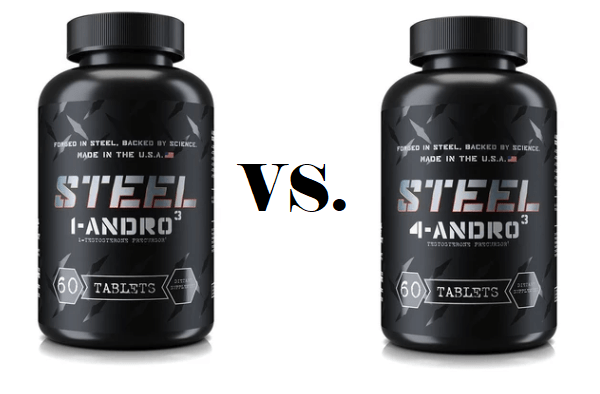
1-Andro is a potent prohormone that does not convert to estrogen. The developers are replacing the methylation process with more gentle methods so that the supplement is less toxic to the liver (the supplement is possibly unsafe). The efficacy of this prohormone can be similar to some steroids, but it lacks several side effects that would occur with anabolic hormonal drugs.
1-Andro is a premium prohormone for beginners and advanced strength athletes. Taking it regularly and regular weight-lifting or bodyweight training helps increase your strength parameters, reduce blubber percentage, and increase muscle mass. Depending on the type of diet, the results of 1- Andro can vary from 7% to 25%.
What to stack 1- Andro with?
- Epi Andro
- Adipokinetix
- Creatine hydrochloride (does not retain water);
- Branched side-chain amino acids where leucine, isoleucine, and valine concentration is 8:1:1 (BSAA 8.1.1)
- 1 and 4 Andro cycle

Important: prohormone supplementation presupposes a well-balanced diet in which simple carbohydrates and sugars are minimized or absent altogether. If fast carbohydrates dominate the diet, it is necessary to increase the amount of fiber consumed. “One broccoli for every burger, for example.”
1-Andro vs. 4-Andro
What’s the difference between 1-Andro and 4-Andro, and why should you care? The main distinction between the two is the risk of adverse effects. 4-Andro converts to DHT and Estrogen, but 1-Andro does not.
1-Andro contains the DHEA isomer 1-DHEA, which is found in nature. 1-DHEA transforms to 1-androstenediol and 1-testosterone, both non-estrogenic, rather than estrogen or testosterone.
According to research published in Endocrine Reviews, [Colldén et al., 2022] on dehydroepiandrosterone supplementation and tissue-specific sex steroid levels: “While DHEA treatment restored physiological levels of testosterone and DHT in male reproductive organs, treatment resulted in supraphysiological local androgen levels in the liver. DHEA treatment substantially increased liver testosterone levels by 4-fold and DHT by 536% compared with vehicle-treated mice. The unexpected supraphysiological androgen levels in the liver raise concerns about uncontrolled DHEA use and the potential for hepatotoxicity and liver disease risk.”
4-DHEA has a low estrogen and DHT conversion rate and transforms to 4-androstenediol as its first significant metabolite. As a result, stacking them together can assist users in maintaining a healthy testosterone-to-estrogen ratio in both Andro stack cycle, allowing you to grow lean muscle mass both wet and dry.
The effects of taking 1-Andro:
- Eliminates the catabolic processes associated with the destruction of muscle mass;
- Stabilizes anabolic processes in the athlete’s body;
- Causes supercompensation effects without compromising health;
- Accelerates recovery processes after workouts.
The Advantages of 1-Andro:
- No such side effects as baldness, problems with the top layer of skin, and excretory systems, if recommendations for use are followed.
- Improves male sexual health.
- The supplement normalizes testosterone synthesis and the function of vital organs.
- 1-Andro does not work like Viagra or its analogs.
- No serious toxicity and adverse effects on the liver and kidneys.
- A convenient form for use – is oral administration.
How to Use 1-Andro?
Take 2-4 capsules per day, divided into several intakes, with plenty of water—the duration of the cycle is 4 to 8 weeks. After taking a break for 2 to 3 months, two weeks before the end of the cycle, you need to start taking drugs (PCT) that increase your testosterone level.
To be on the safe side, you should take post-cycle therapy with drugs that normalize your hormones’ synthesis.
Do not exceed the recommended dosage. Ideally, you should consult a specialist before use.
4 Andro solo cycle effects
4-Andro is converted in the body in two steps, but in the end, it is converted into testosterone.
What is very important, it is converted to both 4-androstenedione (Andro Dione) and 4-androstenediol (Andro Diol – known as 4-AD), that is, in the Diol form and the Dione form. 4-AD precisely is converted into testosterone.
According to a landmark JAMA study, [King et al., 1999]examining the effect of oral androstenedione on serum testosterone and resistance training adaptations: “In young normotestosterogenic men, androstenedione supplementation (300 mg/d) did not enhance serum testosterone concentration or muscle fiber size and strength compared to placebo during 8 weeks of resistance training. Significantly higher serum estrone concentrations were observed after 2, 5, and 8 weeks of supplementation (p < 0.05), and the serum HDL-cholesterol concentration declined significantly (p < 0.05). The increases in lean body mass, muscle fiber cross-sectional area, and muscle strength were not enhanced with androstenedione supplementation.”
Unlike 1-ANDRO, which lowers testosterone levels and gives some lethargy, 4-ANDRO, on the contrary, increases sex drive.
According to the American Journal of Physiology–Endocrinology and Metabolism, [Villareal & Holloszy, 2006] examining DHEA supplementation and weight training in elderly adults: “DHEA supplementation alone for 6 months did not significantly increase strength or thigh muscle volume. However, DHEA therapy potentiated the effect of 4 months of weightlifting training on muscle strength (evaluated by one-repetition maximum and Cybex dynamometry) and on thigh muscle volume (measured by magnetic resonance imaging). Serum insulin-like growth factor concentration increased in response to DHEA replacement, providing evidence that DHEA replacement enhances the increases in muscle mass and strength induced by heavy resistance exercise in elderly individuals.”
One other point to note. The dionic form that 4-ANDRO converts to can convert to estrogen, as in other drugs that increase your testosterone levels. Therefore, it is essential to use an aromatase inhibitor while taking this prohormone; also, to be sure everything is okay in the body, take a blood test and see the tests first.
According to a comprehensive clinical review on anabolic androgenic steroid-induced liver injury published in World Journal of Gastroenterology, [Petrovic et al., 2022] examining hepatotoxicity from androgens: “AAS-induced liver injury manifests through several pathophysiological mechanisms including disturbance of antioxidative factors, upregulation of bile acid synthesis, and hepatocyte hyperplasia. Most hepatotoxic effects including cholestasis and peliosis hepatis are associated with orally administered androgens. Most cases respond to supportive measures with liver function normalizing upon discontinuation, but higher hepatocellular carcinoma prevalence with long-term AAS use remains concerning. Liver function tests should be monitored, and prohormone use should be discontinued if hepatic dysfunction develops.”
4-Andro is very popular for building muscle mass and increasing strength. Bodybuilders and lifters use this product to increase libido and muscle. It is a potent prohormone that is a safer alternative to illegal steroids and converts to testosterone.
4-Andro is not only very anabolic and androgenic. It increases muscle mass in proportion to an increase in strength.
You can expect increased testosterone levels, pronounced venosity, and a pump.
References
- Colldén, H., et al. (2022) – “Dehydroepiandrosterone Supplementation Results in Varying Tissue-Specific Sex Steroid Levels” published in the Journal of Endocrinology. The study treated orchiectomized male mice with DHEA and measured intra-tissue levels of sex steroids using gas chromatography–mass spectrometry. Results showed DHEA treatment restored physiological levels in reproductive organs but caused supraphysiological local androgen levels in the liver, with testosterone increased 4-fold and DHT increased by 536% compared with vehicle-treated mice, raising concerns about uncontrolled DHEA use and potential hepatotoxicity. [Colldén et al., 2022]
- King, D.S., et al. (1999) – “Effect of Oral Androstenedione on Serum Testosterone and Adaptations to Resistance Training in Young Men: A Randomized Controlled Trial” published in JAMA. The 8-week randomized controlled trial of 30 healthy, normotestosterogenic men found that androstenedione supplementation (300 mg/d) did not enhance serum total or free testosterone concentration, and the increases in lean body mass, muscle fiber cross-sectional area, and muscle strength were not enhanced with androstenedione supplementation. Significantly higher serum estrone concentrations occurred after 2, 5, and 8 weeks (p < 0.05), and serum HDL-cholesterol declined significantly (p < 0.05). [King et al., 1999]
- Petrovic, A., et al. (2022) – “Anabolic Androgenic Steroid-Induced Liver Injury: An Update” published in World Journal of Gastroenterology. The comprehensive review documents that AAS-induced liver injury manifests through disturbance of antioxidative factors, upregulation of bile acid synthesis, and hepatocyte hyperplasia. Most hepatotoxic effects including cholestasis and peliosis hepatis are associated with orally administered androgens. Most cases normalize with discontinuation, but higher hepatocellular carcinoma prevalence with long-term AAS use remains concerning, and liver function monitoring is recommended. [Petrovic et al., 2022]
- Villareal, D.T., & Holloszy, J.O. (2006) – “DHEA Enhances Effects of Weight Training on Muscle Mass and Strength in Elderly Women and Men” published in the American Journal of Physiology–Endocrinology and Metabolism. The 10-month randomized, double-blind, placebo-controlled study of elderly women and men found that DHEA supplementation alone for 6 months did not significantly increase strength or thigh muscle volume. However, DHEA therapy potentiated the effect of 4 months of weightlifting training on muscle strength and thigh muscle volume measured by magnetic resonance imaging. Serum insulin-like growth factor concentration increased in response to DHEA replacement. [Villareal & Holloszy, 2006]
Related Posts:
The BoostHormone Research Team is a collective of fitness researchers, nutrition specialists, and health science professionals dedicated to providing evidence-based information about hormone optimization and performance enhancement.
With expertise in sports nutrition, endocrinology, and supplement science, our team analyzes peer-reviewed research and clinical studies to deliver honest, science-backed insights. We cut through industry hype to provide the accurate information you need to make informed decisions about your health and performance.
Our mission: translate complex scientific research into practical, actionable guidance – always prioritizing your safety and long-term wellness. Read Our Editorial Guidelines.