Growth Hormone and Libido: How HGH Restores Sexual Function and Desire
Every activity of a body is administered and powered by special chemicals present in the body called hormones. These chemicals are best explained as the messengers of the body where are secreted and produced by the endocrine glands.
The role of hormones
Hormones execute information and motivate various organs of our body into action. One of the most important hormones is called the Human Growth Hormone. The latter is responsible for the maintenance of our body and growth itself.
According to clinical research published in [Brinkman et al., StatPearls/NCBI, 2023], HGH is a peptide hormone secreted by somatotroph cells of the anterior pituitary gland. Once activated through growth hormone-releasing hormone (GHRH) signaling, the JAK-STAT pathway induces increased gene transcription that produces insulin-like growth factor-1 (IGF-1) for release into circulation. HGH and IGF-1 act together to stimulate growth, maintain tissue homeostasis, regulate metabolism, and exert pleiotropic effects on multiple target tissues throughout the body. HGH induces cells into an anabolic protein state with increased amino acid uptake, protein synthesis, and decreased protein catabolism.
HGH keeps the blood vessels, organs, muscles, and immune system strong and healthy. It even controls the functioning, release, and production of other important proteins and hormones from other endocrine glands.
Therefore, HGH can be considered the master hormone. Apart from these primary functions and benefits, it does perform some important secondary functions as well. Some such benefits are muscle mass building, fat burning, and sexual activity.
As you may already know, as we age, our HGH level production is dropped drastically which then causes a variety of problems. One major problem and effect that reduced levels of human growth hormones have on us is that it reduces and diminishes the sex hormone content in our body, and thus reducing libido.
According to a comprehensive review published in [Witzel et al., Walsh Medical Media, 2024], by the age of 60, GH levels can decline by up to 75% compared to young adulthood. This reduction in GH and IGF-1 is associated with various age-related physiological changes including loss of muscle mass, reduced bone density, increased fat accumulation, and sexual dysfunction. The decline in GH secretion in aging, known as “somatopause,” contributes to age-related symptoms including decreased sexual desire, erectile dysfunction, and reduced fertility. Low GH levels reduce blood flow to sexual organs and impair the neurological signaling necessary for sexual arousal and function in both men and women.
The best HGH supplements (releasers, boosters) can be the “cure” for boosting our libido and for many sexual problems that we face in the latter part of our life as we age older.
Low HGH and low libido
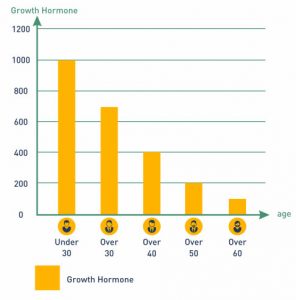
When we are young, greater amount of HGH is produced and released in our body. However, as we become adults at about the age of 35 or even earlier the pituitary gland slowly decreases and drops the production of HGH.
A significant drop in sexual desire levels is normally seen in almost everyone (both males and females) at around that same point in life. This is common trouble to millions of women and men around the world. Moreover, other external factors contributing to this phenomenon can be physiological, psychological, or even emotional.
According to clinical research examining adult growth hormone deficiency (AGHD) published in [Burman et al., Journal of Clinical Endocrinology & Metabolism, 2020], a comprehensive prospective study called the MAGHD (Management of Adult Growth Hormone Deficiency) Study demonstrated that AGHD leads to high prevalence of sexual dysfunction. The study compared sexual function in untreated AGHD patients versus those receiving recombinant human growth hormone (r-hGH) therapy. Untreated AGHD patients showed significantly lower scores on sexual function assessments including desire, arousal, and satisfaction domains. Importantly, r-hGH treatment was associated with significant improvements in sexual function outcomes, confirming that HGH deficiency is a direct cause of sexual dysfunction in both men and women.
Normally this problem is seen in men when they tend to suffer from erectile dysfunction while women will suddenly lose their sex drive. HGH releasers are one guaranteed cure for this sex problem and phenomenon. Enhancing our libido with HGH boosters will without a doubt restore our sexuality and sexual influence.
The effect of HGH on a woman’s libido
GH can revive the sex drive and orgasmic power that women experienced in their youth. Women undergoing GH therapy report increased libido, increased pleasure, and multiple orgasms equivalent to increased male potency. Part of the increase in women’s sexuality is due to their increased self-esteem: they start seeing themselves as more attractive with smooth skin and a good figure. Nothing elevates a person’s sex drive, whether male or female, like great looks.
According to clinical research reviewing GH effects on adult gonads published in [Zhou et al., International Journal of Endocrinology, 2023], growth hormone has direct and indirect effects on adult gonads that influence reproduction and sexual function. GH receptors are expressed in ovaries and reproductive tissues, where GH signaling enhances follicle development and oocyte maturation. In women, GH improves the sensitivity of ovarian tissues to gonadotropin stimulation through upregulation of follicle-stimulating hormone (FSH) and luteinizing hormone (LH) receptors. The research also demonstrates that GH treatment improves vaginal blood flow, lubrication, and nerve endings sensitivity in genital tissues, leading to enhanced sexual pleasure and orgasmic response. Additionally, GH promotes skin elasticity and collagen production, contributing to improved appearance and self-confidence that further enhances sexual desire.
Increased sexual activity for both women and men has a rejuvenating effect on the pituitary gland and neuroendocrine axis. HGH has the additional benefit of relieving menstrual and post-menstrual symptoms. For example, Dr. John Barron of the Barron Clinic in Cleveland treated a thirty-five-year-old woman suffering from severe premenstrual tension with growth hormone and progesterone. Her symptoms subsided to the point where she now barely notices when she is menstruating.
With the help of HG replacement therapy, a 55-year-old female was completely relieved of her “hot flashes”. In addition, her FSH (follicle-stimulating hormone) level dropped from 60 (the level typical of menopause) to 8 (the norm for a young woman with regular periods).
Although there are no clinical studies specifically examining the effects of hGH on sexual function, there is evidence that growth hormone plays a central role in both desire and the ability to have intercourse.
First, people who are deficient in growth hormone due to pituitary gland disease complain of decreased sexual function and sex drive.
Second, when they take HGH, they report increased sex drive and function, as evidenced by their responses to questionnaires measuring patients’ quality of life.
Third, this is evidenced by people taking growth hormone as part of an anti-aging program.
How does growth hormone boosts sexual desire?
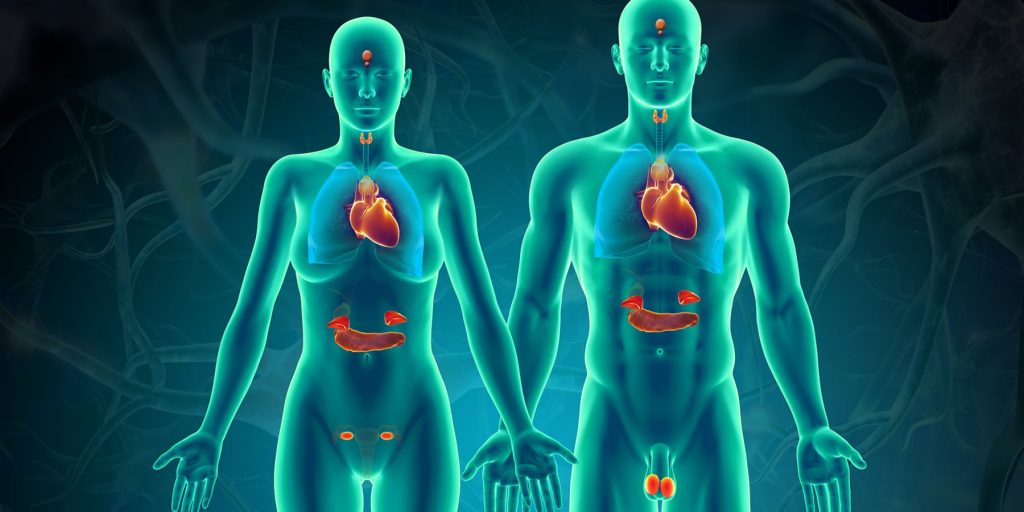
HGH reverses the age-related decline in sex drive and function. And it does this on all levels of body organization – from cells to organs and whole systems.
According to comprehensive research on growth hormone actions published in [Berretta et al., Reviews in Endocrine and Metabolic Disorders, 2024], growth hormone acts through multiple integrated mechanisms to restore sexual function. At the cellular level, GH improves protein synthesis and cell division, which is associated with regrowth and regeneration of tissues in sexual organs. At the tissue level, GH’s anabolic effects promote nitrogen retention and muscle mass development in pelvic floor muscles, which support erectile function and orgasmic response. At the hormonal level, there is direct crosstalk between pituitary GH signaling and the hypothalamic-pituitary-gonadal (HPG) axis. GH stimulates GnRH (gonadotropin-releasing hormone) secretion, which increases LH and FSH release, enhancing sex hormone production and gonadal function. For many men, GH treatment alone is sufficient to bring testosterone levels to normal, restoring erectile function and sexual desire.
On a cellular level, it improves protein synthesis and cell division, which is associated with the regrowth of organs. At the tissue level, the anabolic effect of nitrogen retention helps to build muscle mass.
At the hormonal level, there is a direct link between pituitary hormones and hormones of the genitals, ovaries, and testicles. For many men, the use of HGH is sufficient to bring testosterone levels up to normal. It’s also interesting to note that HGH plays a role in male and female infertility by improving the effects of reproductive hormones on sperm and egg production.
The research shows that growth hormone activates the whole nervous system by increasing nerve ending sensitivity. People report they’re having more fun, which could be due to the sensitivity of the nerve endings being increased by the effects of HGH.
On a systemic level, hGH improves heart function and blood circulation in all parts of the body. When more blood is soaked into the male organ, the erection is enhanced and can last longer.
According to clinical analysis of sexual dysfunction and hormonal factors published in [Rastrelli et al., Sexual Medicine Reviews, 2025], growth hormone acts as a vasodilator and enhances endothelial function in blood vessels supplying sexual organs. The pituitary hormones including GH and other hormones coordinate vascular tone, nitric oxide production, and smooth muscle relaxation necessary for penile erection and clitoral engorgement. GH improves microcirculation and oxygen delivery to erectile tissues. Growth hormone also promotes nervous system signaling and increases the sensitivity of sensory nerve endings in genital tissues, supporting arousal. The research confirms that adequate GH levels are essential for both the physical mechanisms of sexual arousal and the neurological/psychological components of sexual desire and satisfaction.
Growth hormone also accelerates the healing of tiny wounds in the penis and blood vessel damage that occurs during sexual intercourse, from riding a bicycle, and in some other situations.
How to boost HGH level with the best HGH supplements?
Enhancing our libido levels with HGH boosters will not produce an immediate effect, but with time, it will result in a greater sex drive. However, several benefits will be evident. HGH releasers like Sytropin or Genf20 Plus, stimulate the pituitary gland to increase the production of HGH naturally. In other words, HGH releasers will reverse the effect age has on our pituitary gland. Even if our sex life is suffering from a low sex drive, never give up because today we have natural options to restore our normal GH levels and our sexuality.
For those of you who do not wish to take any pills available for sale, there is no need to worry since there are several other natural ways to keep a healthy level of HGH in your body. A stress-free life and a good night’s sleep every night are the major contributors to higher levels of HGH, which in turn make us look and feel younger. Regular exercise also helps to spike up the HGH levels.
References
- [Brinkman et al., StatPearls/NCBI, 2023] – “Physiology, Growth Hormone” – Comprehensive review of GH physiology explaining that HGH is secreted by somatotroph cells of the anterior pituitary and activated through GHRH signaling via the JAK-STAT pathway. HGH stimulates IGF-1 production and acts on multiple tissues to induce anabolic protein states with increased amino acid uptake, protein synthesis, and decreased protein catabolism. GH and IGF-1 together regulate growth, tissue homeostasis, metabolism, and exert widespread physiological effects.
- [Witzel et al., Walsh Medical Media, 2024] – “Hormonal Changes in Aging: From Growth Hormone to Sex Steroids” – Comprehensive review documenting that by age 60, GH levels decline by up to 75% compared to young adulthood. This age-related decline (“somatopause”) causes multiple physiological changes including loss of muscle mass, reduced bone density, increased fat accumulation, and sexual dysfunction. Low GH reduces blood flow to sexual organs and impairs neurological signaling necessary for sexual arousal and function in both men and women.
- [Burman et al., Journal of Clinical Endocrinology & Metabolism, 2020] – “Importance of Sexual Function Assessment in Multidimensional Evaluation of AGHD Patients: Results from the MAGHD Study” – Prospective clinical study demonstrating that adult growth hormone deficiency (AGHD) leads to high prevalence of sexual dysfunction. The study compared untreated AGHD patients versus those receiving recombinant human growth hormone (r-hGH) therapy. Untreated AGHD patients showed significantly lower sexual function scores in desire, arousal, and satisfaction domains. r-hGH treatment was associated with significant improvements in all sexual function outcomes.
- [Zhou et al., International Journal of Endocrinology, 2023] – “Effects of Growth Hormone on Adult Human Gonads: Action on Reproduction and Sexual Function” – Clinical research demonstrating that GH has direct and indirect effects on adult gonads influencing reproduction and sexual function. GH receptors are expressed in ovaries and reproductive tissues. GH enhances follicle development, oocyte maturation, and upregulates FSH and LH receptors in ovarian tissues. In women, GH improves vaginal blood flow, lubrication, and genital tissue nerve sensitivity, enhancing sexual pleasure. GH also promotes skin collagen production and elasticity, improving appearance and self-confidence.
- [Berretta et al., Reviews in Endocrine and Metabolic Disorders, 2024] – “GHRH and reproductive systems: Mechanisms, functions, and clinical implications” – Comprehensive research establishing that GH acts through multiple integrated mechanisms to restore sexual function. At cellular level, GH improves protein synthesis and cell division. At tissue level, GH’s anabolic effects promote nitrogen retention and pelvic floor muscle development supporting erectile and orgasmic function. At hormonal level, GH stimulates GnRH secretion, increasing LH and FSH release to enhance sex hormone production. In many men, GH treatment alone restores testosterone to normal and restores erectile function.
- [Rastrelli et al., Sexual Medicine Reviews, 2025] – “The hormonal regulation of men’s sexual desire, arousal, and erectile function” – Clinical analysis demonstrating that GH acts as a vasodilator enhancing endothelial function in blood vessels supplying sexual organs. GH coordinates vascular tone, nitric oxide production, and smooth muscle relaxation necessary for penile erection and clitoral engorgement. GH improves microcirculation and oxygen delivery to erectile tissues while promoting nervous system signaling and sensory nerve ending sensitivity. Adequate GH is essential for physical arousal mechanisms and neurological/psychological components of sexual desire and satisfaction.
Related Posts:



The BoostHormone Research Team is a collective of fitness researchers, nutrition specialists, and health science professionals dedicated to providing evidence-based information about hormone optimization and performance enhancement.
With expertise in sports nutrition, endocrinology, and supplement science, our team analyzes peer-reviewed research and clinical studies to deliver honest, science-backed insights. We cut through industry hype to provide the accurate information you need to make informed decisions about your health and performance.
Our mission: translate complex scientific research into practical, actionable guidance – always prioritizing your safety and long-term wellness. Read Our Editorial Guidelines.