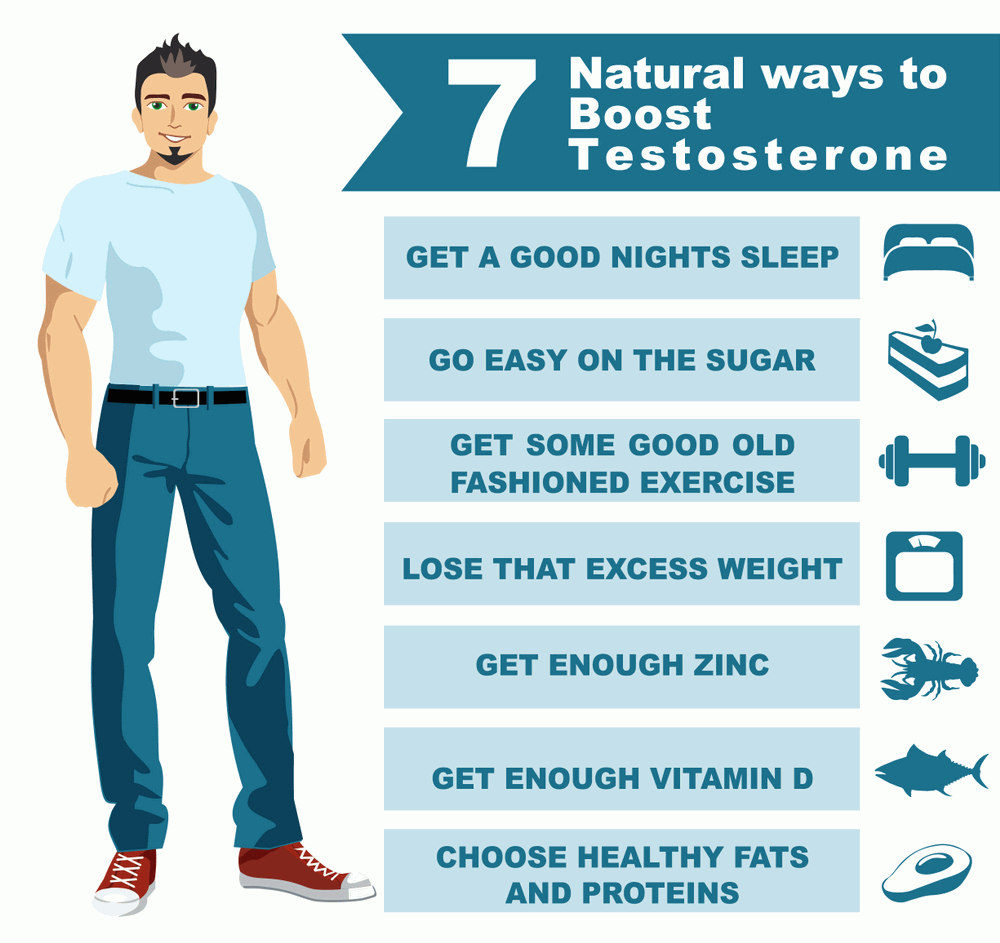
Today we’re talking about reasons for why someone might have low testosterone levels. So we’re going to talk about causes of low testosterone and about ways to increase testosterone levels naturally.
Low testosterone is a condition that affects men most commonly later in age, in their 50s, 60s, and older. It’s related to just a natural process of testosterone decrease in overtime. However, it can be seen in men of younger age or men who have had a different medical problem.
Testosterone is the male sex hormone. It’s what gives people their libido, their sexual desire, but it’s also important for bone density, make your bones strong and hard, insulin control, which is controlling your diabetes and preventing metabolic syndrome.
These symptoms of low testosterone include poor energy, especially in the afternoon, sleeping difficulty, reduced endurance when exercising, reduced work productivity, reduced exercise productivity, mental effects such as irritability, depressive symptoms, confusion, or short term memory loss.
There are a lot of herbal treatments being sold out there but sometimes we have no idea what’s actually in that medication. There could be things that could be harmful to your health so you want to make sure you’re in proper medical care with somebody who specializes in treating low testosterone. Make sure to read our reviews of the best science-based testosterone boosters here.
What causes low testosterone?
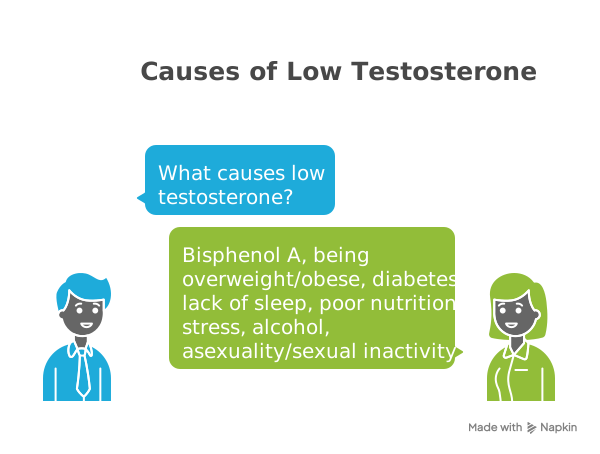
✔️ Bisphenol A Dangers
One of the largest contributors to low testosterone levels is the chemical Bisphenol A. Now Bisphenol A is found in polycarbonate plastics so an example would be plastic water bottles.
According to a [NIH Human Study, 2010] that examined 167 men recruited through an infertility clinic, men with higher urinary BPA concentrations showed inverse associations with serum levels of inhibin B and the estradiol:testosterone ratio (E2:T), indicating that “BPA was detected in 89% of urine samples” and was negatively associated with reproductive hormone markers, confirming widespread human exposure to this endocrine disruptor.
Studies have shown that Bisphenol A or BPA lowers testosterone levels in men and it also lowers the levels of another androgen and it’s also been shown that men that go to fertility clinics nearly 90 percent have bisphenol A or BPA in their urine.
According to [Oxford University Press, Human Reproduction Open, 2023], “BPA exposure causes hormonal disruption and alters mitochondrial dynamics and activity, ultimately leading to decreased male fertility.” The research demonstrated that BPA acts by binding to estrogen receptors and G protein-coupled receptors, activating signaling pathways that lead to aberrant hormone levels and impaired testicular mitochondrial function, with results showing significant increases in FSH while LH and testosterone levels were significantly lower following BPA exposure.
Bisphenol A is considered one of the largest contributors to low testosterone in men.
✔️ Overweight or obesity
The second reason for low testosterone levels is being overweight or obese and the reason is that if an individual has more adipose tissue or more fat the adipose tissue contains an enzyme known as aromatase. Aromatase is an enzyme that converts testosterone to estrogen. We reduce our testosterone levels by having more of this enzyme around.
According to [Journal of Clinical Endocrinology & Metabolism, 2025], “The high expression of aromatase enzyme in the adipose tissue enhances the conversion of androgens into estrogens which in turn exerts a negative feedback on hypothalamus and pituitary, inhibiting the production of gonadotropin-releasing hormone (GnRH), luteinizing hormone (LH) and follicle stimulating hormone (FSH) and, as a consequence, of testosterone by the testis resulting in hypogonadotropic hypogonadism.” This research found that aromatase (ARO) expression in subcutaneous adipose tissue was significantly increased in obese men and was linked to insulin resistance and glycemia.
✔️ Diabetes
There’s also the issue with diabetes. If you’re overweight or obese it increases the risk of diabetes and diabetes has also been shown to reduce testosterone levels.
✔️ Lack of sleep
Another reason for low testosterone levels is reduced sleep. Reduced sleep leads to increased cortisol levels or that stress hormone cortisone and it also lowers morning testosterone levels.
According to [Academic Sleep Journal, 2024], “The 24-hour rhythm in cortisol is driven by the circadian clock and peaks at the habitual sleep–wake transition in the morning, and progressively decreases to a nadir in the evening. Sleep restriction increases late afternoon–early evening cortisol levels. These cortisol changes are in conjunction with a decrease in 24-hour testosterone in men, and preventing both the flattening of the diurnal slope of cortisol and the reduction in testosterone in men by means of a dual hormone clamp mitigates the development of insulin resistance from sleep restriction by at least 50%.”
If we wake up earlier than normal our testosterone levels are lower than if we were to sacrifice our sleep in the first half of the night.
According to [Journal of Clinical Sleep Medicine, 2014], “The increase in testosterone is sleep, rather than circadian rhythm, dependent and requires at least 3 h of sleep with a normal architecture.” The research demonstrated that plasma testosterone levels begin to increase with the onset of sleep, peak at the first REM sleep episode, and remain elevated until waking, with the longer REM sleep latency correlating with slower testosterone rise.
✔️ Nutrition
One more reason for low testosterone levels is dietary factors. Certain things in our diet can reduce testosterone levels and there are certain things that we need to get from our diet such as vitamins and minerals that are required for testosterone production.
If we have a diet that’s very low in fat this can lead to reduced testosterone levels. A deficiency in the mineral zinc also reduces testosterone levels. Zinc is important in the production of testosterone so if we have a deficiency in zinc we will have lower testosterone levels.
According to a [MDPI Antioxidants Journal, 2025] systematic review analyzing 38 peer-reviewed studies from 2000 to 2024, “Zinc deficiency is linked to impaired spermatogenesis and male infertility, while zinc supplementation improves testosterone levels. Zinc deficiency reduces testosterone levels through structural damage to the testes and hindering testosterone synthesis due to oxidative stress, while serum zinc levels show a positive correlation with total testosterone, highlighting the importance of moderate zinc supplementation in enhancing androgen levels.”
Any deficiency in vitamins E and C also can reduce testosterone.
According to [Journal of Andrology, 2011], “Vitamin C is known to protect spermatogenesis and plays a major role in semen integrity and fertility, increases testosterone levels, and prevents sperm agglutination. It is an important chain-breaking antioxidant, contributing up to 65 percent of the total antioxidant capacity of seminal plasma found intracellularly and extracellularly.” The study demonstrated that vitamin C treatment in hyperglycemic rats reduced oxidative stress levels, increased testosterone and LH levels, and improved seminiferous tubular diameter.
✔️ Stress
As I mentioned before cortisol is a stress hormone and increased cortisol level acts on the brain to increase levels of the hormone gonadotropin inhibiting hormone this leads to reduced testosterone levels it reduces testosterone production. So, stress lowers testosterone levels!
According to [Reproduction and Metabolism, 2024], “Chronic stress is positively related to the secretion of Gonadotropin Inhibitory Hormone (GnIH) from the hypothalamus. GnIH and cortisol are up-regulated in the presence of acute and chronic stress mediators. GnIH enhances the release of corticosteroids by activating the hypothalamic-pituitary-adrenal axis and inhibits GnRH secretion, which suppresses testosterone production during stress. Chronic stress remains stuck in the ‘on’ position, pumping out epinephrine and cortisol and driving down testosterone production.”
✔️ Alcohol
This is especially important with the consumption of beer! If we take something that’s having estrogen, it’s going to lead to reduced levels of testosterone.
According to [Andrologia Journal, 2022], “Heavy drinkers (>8 drinks per week) who flush showed significantly lower total testosterone levels (4.0 ng/mL) compared to non-drinkers (5.1 ng/mL). The risk of testosterone deficiency was significantly higher in heavy drinkers who flushed than in non-drinkers (odds ratio, 4.37; 95% confidence interval, 1.20–15.88; P=0.025).” Beer specifically contains phytoestrogens, which are plant-based estrogens that mimic estrogen in the body, further suppressing testosterone production.
✔️ Asexuality and Sexual Inactivity
Another reason for a low testosterone level is asexuality or sexual inactivity. The low testosterone levels actually can lead to a lower desire for sex or lower libido and lower libidos can lead to lower testosterone levels. It’s a vicious circle of cause and effect.
According to a [Sexual Medicine Journal, 2021] randomized controlled cross-over pilot study in healthy young men, “Masturbation and visual stimulus may seem to counteract the circadian drop of free testosterone concentrations over the day. Results showed a significant between-condition difference in free testosterone concentrations, with masturbation (p < 0.01) and a visual stimulus (p < 0.05) demonstrating measurable effects on testosterone levels, suggesting that sexual activity influences testosterone rather than testosterone influencing sexual activity.”
8 ways to increase testosterone levels
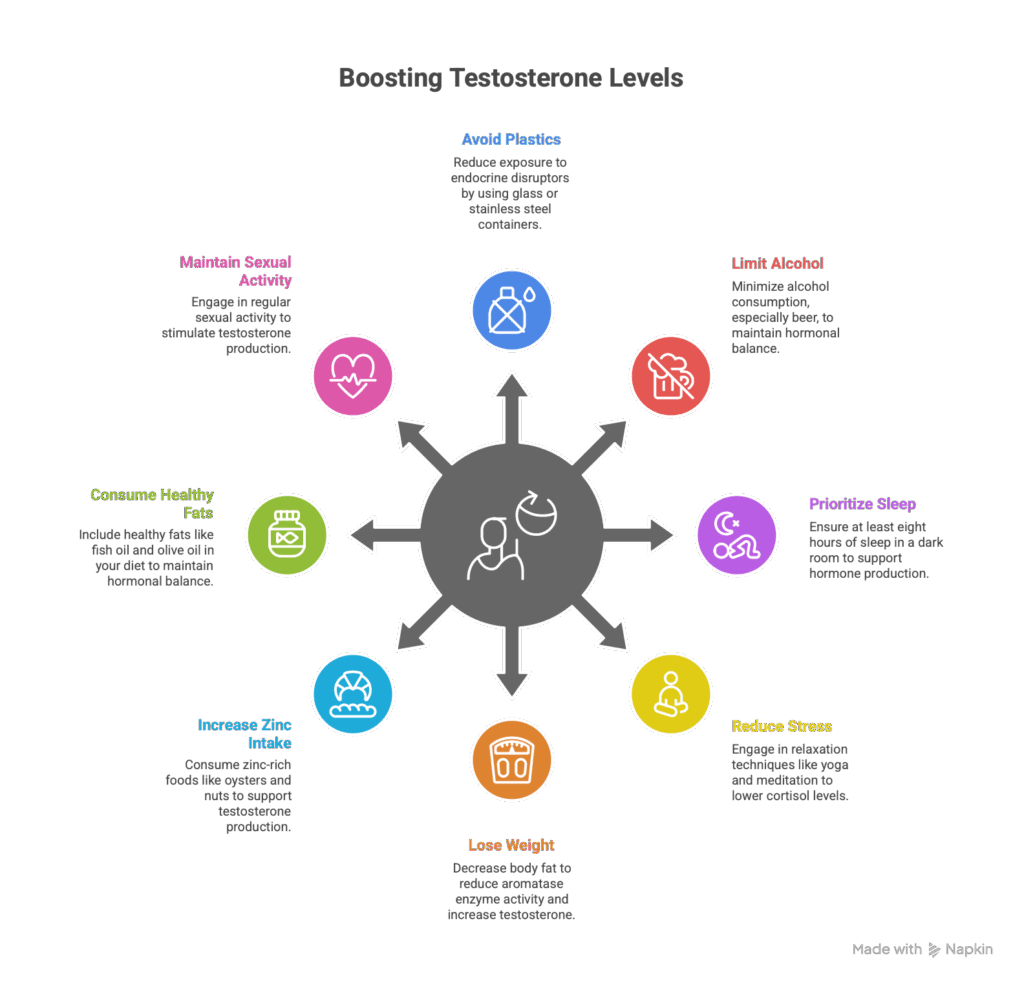
- Avoid the use of plastics or avoid drinking out of plastic bottles. Instead, you should try to drink from a glass or stainless steel.
- The next thing we can do is limit the consumption of alcohol and in particular, avoid drinking beer. It’s better to limit consumption of alcohol but if you’re going to drink alcohol it’s suggested that vodka is a better alternative to beer. Limited consumption of vodka may be okay in this case.
- Sleep in a dark room for at least eight hours per night. Many hormones in the brain are produced during night time. Again if we have a reduced amount of sleep per night we were going to increase cortisol levels. You’re going to reduce your testosterone levels, so it’s important to get a good night’s sleep. It’s so important to turn off your tablet, phone, and your computer at least an hour before you go to bed. If you have your phone on before your bedtime your brain still thinks it’s daylight and may not produce adequate levels of testosterone, HGH, and other hormones.
- The next thing we can do is we can reduce stress through different types of relaxation. Listen to music, doing yoga, doing meditation. These can all reduce the stress they can all help to increase testosterone levels.
- Lose some weight. Remember that adipose tissue or fat contains an aromatase enzyme. The fatter we are the more aromatase enzyme we have. It converts testosterone to estrogen so you’re going to lead to lower levels of testosterone.
- Increase the consumption of zinc from food. Zinc can come from a variety of sources some of the highest concentrations of zinc occur in oysters. You can also get zinc from beef, pork, poultry. If you are wanting to get away from meat you can have other plant-based alternatives such as beans and nuts.
- Increase the consumption of healthy fats. Low-fat diets can lead to reduced testosterone levels. I emphasize healthy fats. Healthy fats like fish oil, plant oils like olive oil and coconut oil are good sources of healthy fats. Things like dark chocolate again have saturated fats real butter has saturated fat and these are necessary for certain quantities. Don’t be shy or nervous about increasing the fat in your diet.
- Have a healthy sexual life.
All of these things can lead to increased levels of testosterone and can ultimately lead to a healthier more energetic life for many men that may suffer from low testosterone levels.
– References –
- NIH Human Study (2010) “Urinary bisphenol A concentrations in relation to serum thyroid and reproductive hormone levels in men from an infertility clinic” — https://pmc.ncbi.nlm.nih.gov/articles/PMC2823133/ Examined 167 men through an infertility clinic, finding BPA detected in 89% of urine samples and negatively associated with reproductive hormone markers including testosterone ratios and inhibin B levels.
- Oxford University Press, Human Reproduction Open (2023) “Bisphenol-A disturbs hormonal levels and testis mitochondrial activity, reducing male fertility” — https://academic.oup.com/hropen/article/2023/4/hoad044/7421915 Demonstrated that BPA exposure causes hormonal disruption through binding to estrogen receptors and G protein-coupled receptors, leading to significantly increased FSH and decreased LH and testosterone levels with impaired testicular mitochondrial function.
- Journal of Clinical Endocrinology & Metabolism (2025) “Altered Expression of Aromatase and Estrogen Receptors in Men with Obesity or Type 2 Diabetes” — https://academic.oup.com/jcem/article/110/10/e3410/7964961 Confirmed that high aromatase expression in adipose tissue enhances androgen-to-estrogen conversion, exerting negative feedback on GnRH, LH, and FSH secretion, resulting in hypogonadotropic hypogonadism in obese men, linked to insulin resistance and glycemia.
- Academic Sleep Journal (2024) “Rhythms in cortisol mediate sleep and circadian impacts on testosterone” — https://academic.oup.com/sleep/article/47/9/zsae151/7706142 Published research showing sleep restriction increases late afternoon–early evening cortisol levels, decreases 24-hour testosterone in men, and preventing both the cortisol and testosterone changes mitigates insulin resistance development from sleep restriction by at least 50%.
- Journal of Clinical Sleep Medicine (2014) “The relationship between sleep disorders and testosterone” — https://pmc.ncbi.nlm.nih.gov/articles/PMC3955335/ Confirmed that testosterone increase is sleep-dependent (requiring at least 3 hours of sleep with normal architecture), peaks during the first REM sleep episode, and remains elevated until waking with longer REM latency correlating to slower testosterone rise.
- MDPI Antioxidants Journal (2025) “Association Between Zinc Levels and the Impact of Its Deficiency on Idiopathic Male Infertility: An Up-to-Date Review” — https://pmc.ncbi.nlm.nih.gov/articles/PMC11851646/ Systematic review of 38 peer-reviewed studies (2000-2024) confirming that zinc deficiency impairs spermatogenesis and male infertility while zinc supplementation improves testosterone levels through restoration of optimal mineral-dependent testosterone synthesis.
- Journal of Andrology (2011) “Vitamin C partially attenuates male reproductive deficits” — https://pmc.ncbi.nlm.nih.gov/articles/PMC3199757/ Research demonstrating that vitamin C is essential for spermatogenesis protection, semen integrity, and fertility, with studies showing it increases testosterone and LH levels while reducing oxidative stress and improving seminiferous tubular diameter.
- Reproduction and Metabolism (2024) “Impact of stress on male fertility: role of gonadotropin inhibitory hormone” — https://pmc.ncbi.nlm.nih.gov/articles/PMC10801237/ Comprehensive review confirming that chronic stress upregulates Gonadotropin Inhibitory Hormone (GnIH) and cortisol, which suppress GnRH secretion and testosterone production through activation of the hypothalamic-pituitary-adrenal axis.
- Andrologia Journal (2022) “Relationship between Alcohol Consumption and Testosterone Deficiency” — https://pmc.ncbi.nlm.nih.gov/articles/PMC9708857/ Clinical study of 314 men showing heavy drinkers (>8 drinks per week) had significantly lower testosterone levels and 4.37 times higher odds of testosterone deficiency compared to non-drinkers, with beer specifically containing phytoestrogens that suppress testosterone.
- Sexual Medicine Journal (2021) “Hormonal response after masturbation in young healthy men – a randomized controlled cross-over pilot study” — https://d-nb.info/1255518278/34 Randomized controlled study demonstrating that masturbation and visual stimulus significantly counteract circadian decline in free testosterone concentrations (p < 0.01), suggesting sexual activity influences testosterone levels rather than vice versa.
Related Posts:



The BoostHormone Research Team is a collective of fitness researchers, nutrition specialists, and health science professionals dedicated to providing evidence-based information about hormone optimization and performance enhancement.
With expertise in sports nutrition, endocrinology, and supplement science, our team analyzes peer-reviewed research and clinical studies to deliver honest, science-backed insights. We cut through industry hype to provide the accurate information you need to make informed decisions about your health and performance.
Our mission: translate complex scientific research into practical, actionable guidance – always prioritizing your safety and long-term wellness. Read Our Editorial Guidelines.