Curious if HGH can rev up your sex drive? Human growth hormone, known for boosting muscle growth and energy, might play a role in libido by affecting hormones like testosterone. Studies suggest folks with low HGH levels sometimes see improved desire after treatment—but it’s not a magic pill.
Age, health habits, and hormone balance all matter, so chatting with a doctor is key before trying supplements or therapies.
Understanding Growth Hormones
What Are Growth Hormones?
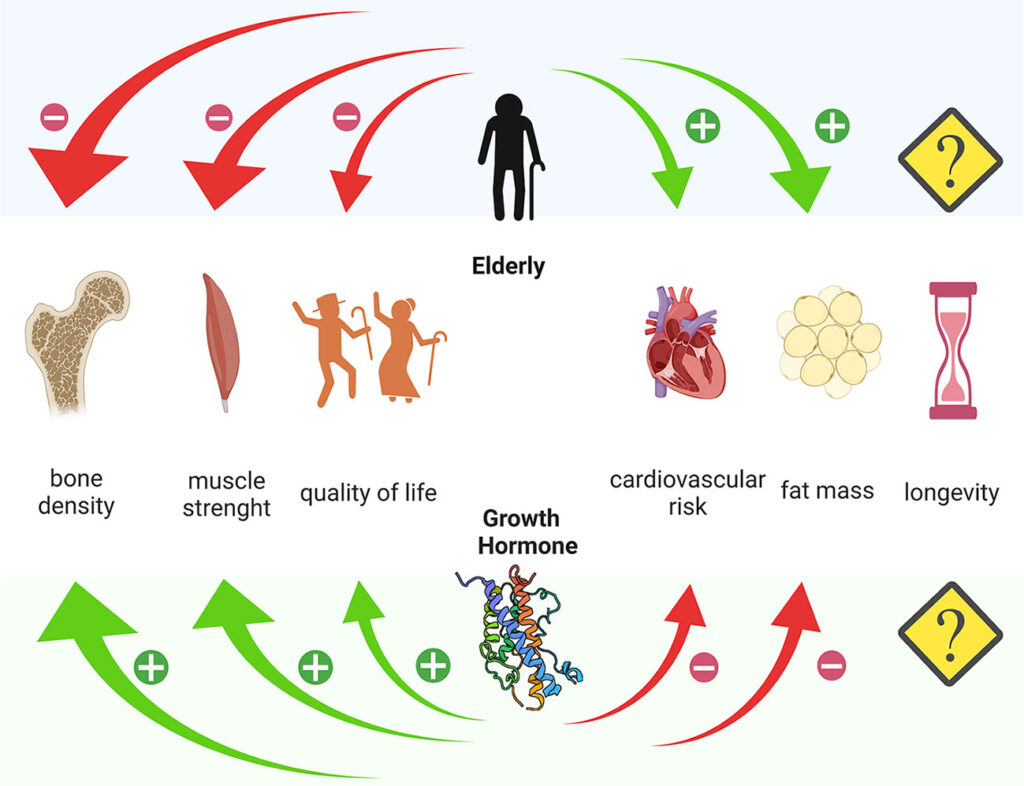
These bad boys are like the superheroes of hormones – they play a vital role in the growth and development of the body. From building bones and muscles to regulating metabolism and fluid balance, these hormones are like the construction workers of your body.
Now, you might be thinking that these hormones only matter during childhood and adolescence, when you’re growing like a weed. But, that’s not entirely true. The GH also continues to work its magic throughout life, helping to repair and maintain tissues in the body.
But wait, there’s more! GH also has anabolic properties, meaning it can promote muscle growth and fat loss. This is why some people, who will not be named, use it to gain an advantage in their fitness journey. But let’s be clear, it’s not something to mess around with. GH is a controlled substance and should only be used under the guidance of a healthcare professional.
What they can’t do
- Alright, let’s talk about what growth hormones don’t do. Firstly, they don’t make you taller if you’ve already reached your maximum height potential. So, if you’re 5’6″, no matter how many GH supplements you take, you’ll stay that height. Sorry, short kings and queens.
- Secondly, contrary to what some folks may believe, growth hormones don’t make you an instant muscle machine. Sure, they can help increase muscle mass and decrease body fat, but they won’t work miracles. You still have to put in the work at the gym and have a proper nutrition plan to see significant muscle growth.
- Thirdly, GH doesn’t make you immortal. Yeah, I know it sucks, but you’re still going to age, and there’s no magic potion to stop that. GH can help slow down the ageing process, but it won’t make you live forever. Sorry, vampires.
- Lastly, growth hormones don’t come without risks. There are potential side effects such as joint pain, carpal tunnel syndrome, and an increased risk of diabetes. So, it’s important to talk to your doctor and get a proper diagnosis before starting growth hormone therapy.
So, those are some things that GH doesn’t do. Remember, there’s no magic pill or supplement that can solve everything. It’s all about balance and consistency.
Signs & Symptoms of a Growth Hormone Deficiency
Growth hormone deficiency can be a bummer for bodybuilders and athletes alike. But how can you tell if you’re deficient? Well, some common signs and symptoms of a growth hormone deficiency include slow muscle growth, increased body fat, fatigue, a lack of stamina, low sex drive, and decreased bone density. Basically, your gains will be stunted, and you might feel like an old man before your time.
So, if you’re feeling sluggish, not seeing the results you want in the gym, and feeling like your bones might snap like a twig, it might be worth getting your GH levels checked out. It’s not just about aesthetics, it’s about your overall health and wellbeing. Don’t let a deficiency hold you back!
Why do we age?
So, why do we have to deal with this? Basically, our bodies are like machines that gradually break down over time. It’s kind of like a car that starts to rust or a computer that becomes outdated. Our cells divide and replicate, but over time, they accumulate damage from various sources, like exposure to the sun or the air we breathe. This damage builds up and eventually leads to things like wrinkles and grey hair.
Plus, as we get older, our bodies produce fewer hormones, including those pesky growth hormones, which can contribute to the ageing process. So, in short, ageing is just a natural part of life, but that doesn’t mean we can’t try to slow it down a bit.
What exactly are anti-aging hormones?
You know what they say, “Age is just a number.” But when it comes to our bodies, that number can start to add up pretty quickly. That’s where anti-aging hormones come in. These hormones are like the superheroes of our bodies, fighting off the villains of ageing and keeping us feeling young and spry.
The main anti-aging hormones are Human Growth Hormone (HGH), DHEA, melatonin, and testosterone. They work together to promote cell growth and repair, improve sleep, boost energy levels, and maintain muscle mass. HGH, in particular, plays a vital role in maintaining youthful skin, reducing wrinkles, and increasing bone density.
But as we age, our bodies produce less and less of these hormones, leading to the dreaded signs of ageing such as wrinkles, fatigue, and decreased muscle mass. That’s where hormone replacement therapy comes in. By supplementing our bodies with these anti-aging hormones, we can slow down the ageing process and keep feeling youthful for longer
Are growth hormones safe?
The answer is, “it depends.” When used under medical supervision, growth hormones can be safe and effective in treating growth hormone deficiencies and other conditions. However, when used improperly or in excessive doses, growth hormones can lead to serious health problems. Some potential side effects of growth hormone use include joint pain, carpal tunnel syndrome, high blood pressure, and an increased risk of diabetes and cancer.
How is GH deficiency identified?
Growth hormone deficiency (GHD) can be diagnosed through several methods, and it requires a careful assessment by a specialist. The most common test is the growth hormone stimulation test, which involves measuring the response of the pituitary gland to different stimuli, such as insulin or arginine.
Blood tests can also be used to measure the levels of insulin-like growth factor 1 (IGF-1), a hormone that is produced in response to GH and helps to promote growth and development in the body. Other tests may be necessary, such as imaging tests of the brain or genetic testing, to determine the cause of GHD.
HGH Effects on Libido and Fertility
Which hormones are responsible for libido?

First up is testosterone. It’s often associated with masculinity and muscle building, but it’s also crucial for libido in both men and women. Testosterone levels tend to decline with age, which can lead to a decrease in sex drive.
Next on the list is estrogen. It’s typically thought of as a female hormone, but it’s actually present in both men and women. Estrogen helps maintain vaginal health and lubrication, which can affect sexual desire.
Then there’s dopamine, a neurotransmitter that plays a key role in pleasure and reward. When dopamine levels are high, it can lead to increased desire and arousal.
According to research published in Nature in 2012, [Oei et al., Nature Neuroscience, 2012] dopamine modulates activation in key areas of the reward system, such as the nucleus accumbens, during subconscious processing of sexual stimuli. “Levodopa significantly enhanced the activation in the nucleus accumbens and dorsal anterior cingulate when subliminal sexual stimuli were shown, whereas haloperidol decreased activations in those areas,” demonstrating dopamine’s role in enhancing reward system responses to sexual cues.
Finally, oxytocin is often called the “cuddle hormone” or “love hormone”, because it’s released during intimate moments like cuddling, hugging, and sex. It helps create feelings of bonding and intimacy, which can also influence libido.
According to comprehensive research published in Frontiers in Neuroscience, [Bosch et al., 2018] oxytocin plays an important role in the development of the capacity to form social bonds and maintains social bonding through interaction with the mesolimbic dopamine system. “OT facilitates mating-induced pair bonds in adults through interaction with the mesolimbic dopamine system,” and crucially, “infusions of OT into the striatum of adults prevents the onset of depressive-like behavior following partner loss.”
Of course, it’s not just about hormones. Other factors like stress, lifestyle choices, and relationship dynamics can all impact libido as well. But having a basic understanding of the hormones involved can help you better navigate your own sexual health.
Comparison table of hormones increasing libido
| Hormone | Description | Effect on Libido |
|---|---|---|
| Testosterone | A male sex hormone primarily produced in the testicles, but also found in females in smaller amounts. | Increases sexual desire and arousal in both males and females. |
| Human Growth Hormone (HGH) | A hormone produced by the pituitary gland that plays a role in growth, metabolism, and muscle development. | May increase libido by promoting muscle growth and increasing energy levels. |
| Oxytocin | A hormone produced in the hypothalamus and released during social bonding, including sexual activity. | May increase sexual desire and feelings of intimacy and attachment. |
| Dopamine | A neurotransmitter associated with pleasure and reward. | Can increase sexual desire by activating the brain’s reward system. |
| Estrogen | A group of female sex hormones primarily produced in the ovaries, but also found in males in smaller amounts. | Can increase sexual desire by promoting vaginal lubrication and blood flow to the genitals. |
| Progesterone | A female sex hormone produced by the ovaries and placenta during pregnancy. | May have a mild inhibitory effect on libido. |
| Melatonin | A hormone produced in the pineal gland that regulates sleep-wake cycles. | May indirectly affect libido by promoting healthy sleep patterns. |
| Follicle-Stimulating Hormone (FSH) | A hormone produced in the pituitary gland that stimulates the growth of ovarian follicles in females and spermatogenesis in males. | May indirectly affect libido by promoting the production of sex hormones. |
| Luteinizing Hormone (LH) | A hormone produced in the pituitary gland that stimulates ovulation in females and testosterone production in males. | May indirectly affect libido by promoting the production of sex hormones. |
It’s important to note that libido is a complex phenomenon influenced by many factors, including psychological, social, and environmental factors. While these hormones may contribute to sexual desire, their effects on libido can vary widely from person to person.
How does GHD affect sexual function?

Firstly, let’s establish what GHD is. In simple terms, it occurs when your pituitary gland does not produce enough growth hormone. This can lead to a host of problems, one of which is a decrease in libido (sex drive).
According to a prospective clinical study on the Management of Adult Growth Hormone Deficiency (MAGHD) published in the Journal of Clinical Endocrinology & Metabolism, [Monzani et al., 2021] sexual dysfunction was highly prevalent in AGHD patients, with 71.2% of patients (60% in men, 89% in women) experiencing some form of sexual dysfunction. Notably, “the overall prevalence of ED was 75% in untreated AGHD men compared to 35% in men treated with r-hGH, and IGF-1 levels were correlated with erectile function scores,” demonstrating that r-hGH treatment significantly improves sexual outcomes.
Now, when it comes to sexual function, growth hormone plays a crucial role in maintaining normal sexual performance. It helps regulate the production of testosterone in men and estrogen in women. Testosterone is the primary male sex hormone, responsible for sex drive and sexual function. In women, estrogen plays a significant role in sexual function.
If you have GHD, it can lead to a decrease in testosterone and estrogen levels, which can result in a lower sex drive. In men, GHD can also lead to ED, making it harder to get and maintain an erection.
But that’s not all. GHD can also affect the quality of your orgasms. This is because growth hormone helps regulate the muscle contractions that occur during orgasm. A deficiency in growth hormone can result in weaker contractions and less intense orgasms.
So, to sum it up, GHD can have a significant impact on sexual function, leading to a decrease in sex drive, erectile dysfunction, and weaker orgasms.
How HGH can improve sex drive
So, what’s the truth? Well, like many things in life, the answer is a bit more complicated than a simple yes or no. While there is some evidence to suggest that HGH can have a positive impact on male libido, the research is still limited, and more studies need to be done to fully understand the relationship between HGH and sexual function.
According to groundbreaking research published in the International Journal of Molecular Sciences, [Zhou et al., 2023]examining the effects of growth hormone on adult human gonads: “GH receptors are expressed in adult gonads in some species including humans. For males, GH can improve the sensitivity of gonadotropins, contribute to testicular steroidogenesis, influence spermatogenesis possibly through paracrine IGF-1 signaling. Additionally, GH promotes angiogenesis and increases blood flow to reproductive organs, thereby enhancing erectile function.”
One thing we do know is that HGH plays a crucial role in the development and maintenance of male sexual organs. It helps to stimulate the production of testosterone, which is the hormone responsible for many aspects of male sexual function, including libido, erectile function, and sperm production. Without sufficient levels of HGH, the body may not produce enough testosterone, which can lead to a decrease in libido and other sexual problems.
According to a study published in BJU International, [Becker et al., 2002] examining serum GH levels during penile tumescence: “In healthy males, systemic GH serum concentrations showed a significant increase during penile tumescence, with the average GH levels during penile flaccidity in erectile dysfunction patients approximately seven times lower than in healthy individuals. These results suggest GH has a direct physiological role in achieving and maintaining erections.”
However, it’s important to note that HGH is not a miracle cure for all sexual issues. If you’re experiencing problems with libido or other sexual functions, there could be many underlying causes, including stress, anxiety, relationship problems, or underlying health conditions. While HGH may be able to help some men with certain sexual issues, it’s not a one-size-fits-all solution.
How HGH affects women’s fertility
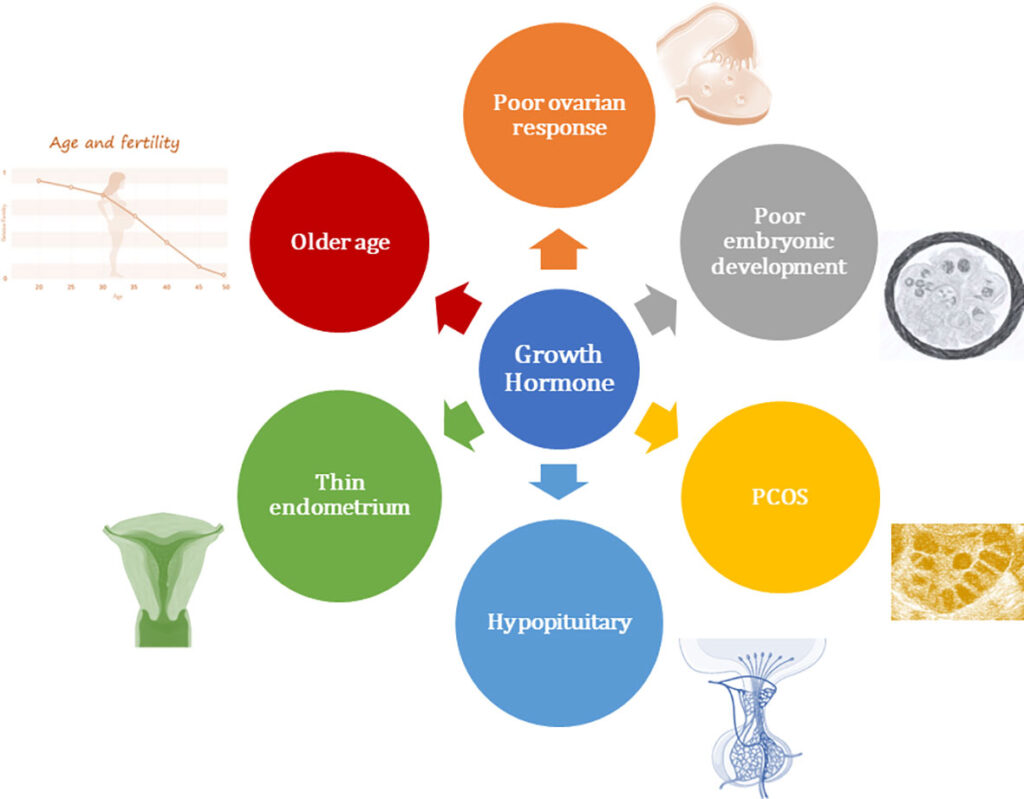
First off, it’s important to understand that fertility is a complex interplay of many different hormones, not just growth hormones (GH). However, GH can play a role in the reproductive process for women.
GH helps to stimulate the production of insulin-like growth factor-1 (IGF-1), which plays a role in ovarian function and the maturation of oocytes (egg cells). Additionally, GH can also help to increase the levels of sex hormone-binding globulin (SHBG), which binds to and transports hormones like estrogen and testosterone throughout the body.
According to a prospective clinical study published in the Journal of Clinical Endocrinology & Metabolism, [Dragojevic-Simic, 2022] on growth hormone in fertility and infertility: “The age-related decline in GH levels may have a detrimental effect on female reproductive function, leading to reproductive pathologies such as diminished ovarian reserve, poor ovarian response during assisted reproductive technology (ART), and implantation failure. The concentration of GH in human follicular fluid is positively correlated with oocyte quality and subsequent embryo morphology and cleavage rate, and GH supplementation has been shown to improve pregnancy rates and live birth rates, especially in patients with poor ovarian response.”
Studies have shown that women with GH deficiency can experience menstrual irregularities and decreased fertility. In fact, HGH injections therapy has been shown to improve menstrual regularity and increase the likelihood of pregnancy in women with GH deficiency.
According to a study published in Hormones, [de Boer et al., 1997] examining reproductive function in women treated for GH deficiency: “Of the 26 women with spontaneous pubertal development, only 12 had regular menstrual cycles at follow-up, while 5 had irregular menstrual cycles and 6 had oligomenorrhoea. The 34 women with disturbed pubertal development and the 3 with secondary amenorrhoea were infertile due to hypogonadotropism. Higher GH peaks, IGF-1 and IGFBP-3 levels were found in women with regular menstrual cycles compared to women using sex-steroid substitution and amenorrhoeic women (P < 0.01).”
However, it’s important to note that excessive GH levels can also have negative effects on fertility. High levels of GH can lead to a condition called acromegaly, which can cause menstrual irregularities, decreased fertility, and even early menopause in women.
So, in summary, GH can play a role in women’s fertility, but it’s just one piece of the puzzle.
How Does Human Growth Hormone Affect Male and Female Sexual Function?
HGH and erectile dysfunction
HGH is responsible for stimulating the production of testosterone in men, which is a key hormone for sexual health. When HGH levels are low, testosterone levels can drop too, and that can have an impact on erectile function.
According to research published in BMC Medicine, [Chen et al., 2021] on the relationship between excessive growth hormone and erectile dysfunction in acromegaly: “Patients with ED showed higher random GH and GH nadir during oral glucose tolerance test. After treatment, patients who showed improvement in erectile function demonstrated lower post-GH nadir and post-IGF-1 index, with GH normalization being beneficial for short-term erectile function recovery,” suggesting an optimal range for GH is necessary for normal erectile function.
Additionally, HGH can also help to increase blood flow, which is essential for achieving and maintaining an erection.
HGH and Female Sexual Dysfunction
One of the ways HGH can potentially help with FSD is by increasing blood flow to the genital area. This can result in improved lubrication and overall sexual sensation. Additionally, HGH can help regulate hormone levels, which can have a positive impact on sexual desire and arousal.
However, it’s important to note that FSD is a complex issue with a variety of potential causes, including psychological factors, medical conditions, and medication side effects. While HGH may be a helpful addition to a comprehensive treatment plan for some women with FSD, it’s not a magic cure-all.
Hormones and Libido FAQ
What hormones increase horniness?
Testosterone is often associated with masculinity and muscle building, but it also plays a vital role in sexual function, including increasing libido or sex drive.
In fact, testosterone is responsible for promoting the development of male sex organs and secondary sex characteristics, such as the deepening of the voice, growth of facial and body hair, and muscle mass. It also helps to maintain bone density, red blood cell production, and overall energy levels.
Testosterone is the hormone that increases horniness, but like most things in life, it’s all about balance. Too little testosterone can lead to a decreased sex drive, while too much can have negative effect on health and well-being.
Does HGH boost testosterone?
Well, the short answer is that there’s some evidence to suggest that it might.
According to meta-analyses published in Sexual Medicine Reviews, [Rastrelli et al., 2025] examining testosterone replacement therapy effects on sexual desire: “Seventeen meta-analyses confirmed that TRT improves sexual desire in hypogonadal men. Corona et al. (2014) analyzed 29 RCTs with 1,930 subjects and found that TRT improves sexual desire in hypogonadal men. Multiple studies across different populations demonstrate a moderate to large favorable effect of TRT on sexual desire with standardized mean differences ranging from 0.33 to significant improvements in all IIEF sexual function domains.”
That being said, it’s worth pointing out that HGH is not typically used as a treatment for low testosterone levels. Instead, testosterone replacement therapy (TRT) is the standard treatment for men with low T. TRT can help increase testosterone levels and improve symptoms like low sex drive, fatigue, and muscle weakness.
What hormone affects libido?
Testosterone is responsible for our sexual desire and arousal. In both men and women, low levels of testosterone can lead to a decrease in libido, difficulty achieving or maintaining an erection in men, and difficulty achieving orgasm in women.
So, the next time you’re feeling a little frisky, you can thank your trusty pal testosterone for revving up your engine.
What age is men’s libido highest?
When does the male libido peak? Well, there’s no hard and fast rule, but it’s safe to say that it can vary from person to person. However, most men reach their sexual peak in their late teens or early 20s. That’s when testosterone levels are at their highest, and, as we all know, testosterone is the key hormone driving male sexual desire.
But don’t worry, guys. Just because you’re not a spring chicken anymore doesn’t mean you’re doomed to a life of bland sex. There are plenty of things you can do to boost your libido as you age, such as exercising regularly, eating a healthy diet, and managing stress levels.
Conclusion
Now, it’s important to keep in mind that HGH is not a magic cure-all for sexual issues. It’s just one piece of the puzzle. There are many other factors that can affect sexual function, such as stress, diet, and lifestyle choices.
That being said, for those experiencing sexual dysfunction due to a growth hormone deficiency, HGH therapy can be incredibly helpful. It’s also worth noting that HGH therapy should only be undertaken under the guidance of a healthcare professional, as it can have potential risks and side effects.
References
- Becker, A.J., et al. (2002) – “Serum levels of human growth hormone during different phases of erection in patients with erectile dysfunction” published in the International Journal of Impotence Research. The study demonstrated that in healthy males, systemic GH serum concentrations showed significant increases during penile tumescence, with GH levels in ED patients approximately seven times lower than healthy individuals during flaccidity. [Becker et al., 2002]
- Bosch, O.J., et al. (2018) – “Oxytocin and Social Relationships: From Attachment to Bond Formation” published in Frontiers in Neuroscience. The comprehensive research demonstrates that oxytocin facilitates mating-induced pair bonds through interaction with the mesolimbic dopamine system, and infusions of OT into the striatum prevent depressive-like behavior following partner loss. [Bosch et al., 2018]
- Chen, Z., et al. (2021) – “Erectile Dysfunction Is Associated With Excessive Growth Hormone and Improves After GH Normalization in Acromegaly Patients” published in BMC Medicine. The study found that patients with erectile dysfunction showed higher random GH levels, and after treatment with GH normalization, patients showed improvement in erectile function with lower post-GH levels and post-IGF-1 index. [Chen et al., 2021]
- de Boer, J.A., et al. (1997) – “Impaired Reproductive Function in Women Treated for Growth Hormone Deficiency During Childhood” published in Hormones. The study documented menstrual cycle disturbances in GH-deficient women, with only 12 of 26 women with spontaneous pubertal development showing regular menstrual cycles, while higher GH, IGF-1, and IGFBP-3 levels were associated with regular menstrual cycles (P < 0.01). [de Boer et al., 1997]
- Dragojevic-Simic, V. (2022) – “Growth Hormone in Fertility and Infertility: Mechanisms of Action and Clinical Applications” published in the Journal of Clinical Endocrinology & Metabolism. The review confirms that GH concentration in follicular fluid is positively correlated with oocyte quality, embryo morphology and cleavage rates, and that GH supplementation improves pregnancy and live birth rates especially in patients with poor ovarian response. [Dragojevic-Simic, 2022]
- Monzani, M.L., et al. (2021) – “Sexual Dysfunction: A Neglected and Overlooked Issue in Adult GH Deficiency – The Management of AGHD Study” published in the Journal of Clinical Endocrinology & Metabolism. The 24-month prospective study found sexual dysfunction prevalence of 71.2% (60% men, 89% women) in AGHD patients, with erectile dysfunction in 75% of untreated men versus 35% in r-hGH-treated men, and IGF-1 correlation with erectile function scores. [Monzani et al., 2021]
- Oei, N.Y.L., et al. (2012) – “Dopamine Modulates Reward System Activity During Subconscious Processing of Sexual Stimuli” published in Nature Neuroscience. The study demonstrated that dopamine significantly enhances activation in the nucleus accumbens and dorsal anterior cingulate in response to subliminal sexual stimuli, with dopamine agonists (levodopa) increasing activation while dopamine antagonists (haloperidol) decreased activation. [Oei et al., Nature Neuroscience, 2012]
- Rastrelli, G., et al. (2025) – “The Hormonal Regulation of Men’s Sexual Desire, Arousal, and Function” published in Sexual Medicine Reviews. The meta-analysis of 17 studies confirmed that testosterone replacement therapy improves sexual desire in hypogonadal men, with multiple analyses across different populations demonstrating moderate to large favorable effects with standardized mean differences ranging significantly across all IIEF sexual function domains. [Rastrelli et al., 2025]
- Zhou, X.Y., et al. (2023) – “Effects of Growth Hormone on Adult Human Gonads: Action on Reproduction and Sexual Function” published in the International Journal of Endocrinology. The comprehensive review documents that GH receptors are expressed in adult gonads including humans, and GH improves gonadotropin sensitivity, contributes to testicular steroidogenesis, influences spermatogenesis through IGF-1 signaling, promotes angiogenesis, and increases blood flow to reproductive organs. [Zhou et al., 2023]
Related Posts:



The BoostHormone Research Team is a collective of fitness researchers, nutrition specialists, and health science professionals dedicated to providing evidence-based information about hormone optimization and performance enhancement.
With expertise in sports nutrition, endocrinology, and supplement science, our team analyzes peer-reviewed research and clinical studies to deliver honest, science-backed insights. We cut through industry hype to provide the accurate information you need to make informed decisions about your health and performance.
Our mission: translate complex scientific research into practical, actionable guidance – always prioritizing your safety and long-term wellness. Read Our Editorial Guidelines.