
Do you suffer from a medical condition that could be treated with human growth hormone (HGH)? You may have heard that HGH can treat a variety of conditions, but do you know who can prescribe it?
In this article, we’ll discuss who can legally prescribe HGH, the types of prescriptions available, and the potential benefits and risks of this powerful hormone. We’ll also explore alternative treatments, legal considerations, and cost.
Understanding these factors can help you determine if HGH is the right choice for you.
Overview of HGH
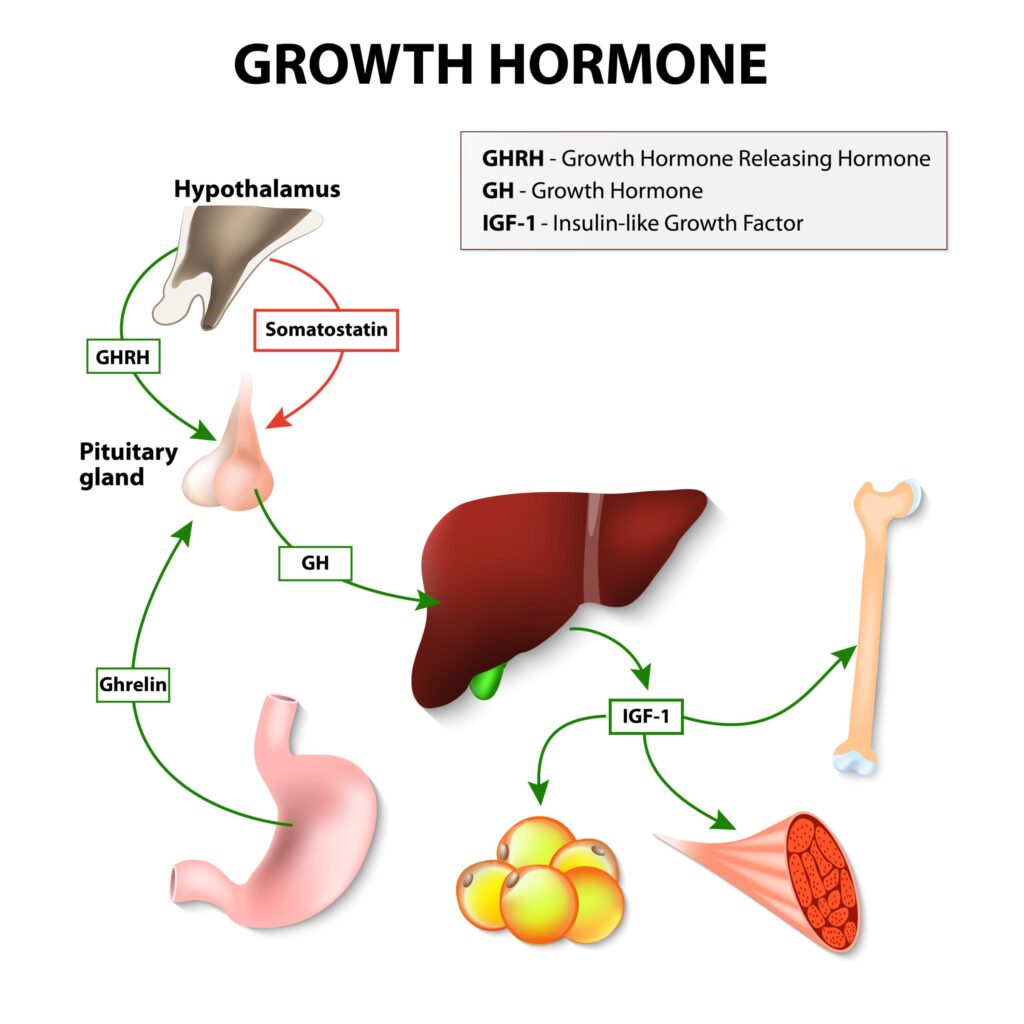 You may be wondering what HGH is and how it’s used, so let’s take a look. HGH stands for Human Growth Hormone and is a prescription drug used to treat hormone deficiency in adults. It’s normally given as a series of injections, and it’s prescribed by doctors who specialize in endocrinology.
HGH works by stimulating the body’s production of growth hormone, which in turn helps to regulate body composition, metabolism, and muscle and bone growth. It can also help with the healing process in adults.
According to the [NIH Clinical Indications for Growth Hormone Therapy, 2022], “Recombinant human growth hormone (GH) first received approval from the United States Food and Drug Administration for clinical treatment in 1985 for pediatric GH deficiency, and its indications subsequently have expanded. Growth hormone therapy affects multiple body systems including growth, metabolism, protein synthesis, and tissue healing.”
A doctor needs to assess the patient’s medical history and current state of health before prescribing HGH injections. The doctor may also order laboratory tests to determine the best dosage and frequency of injections. There are certain conditions that may prevent a doctor from prescribing HGH, including cancer, diabetes, and heart disease.
Conditions Treated With HGH
According to the [Growth Hormone Research Society, 2008], the US FDA has approved HGH for use in the following pediatric conditions: “Growth hormone deficiency; Turner syndrome; Chronic renal insufficiency; Small for gestational age or intrauterine growth retardation; Prader-Willi syndrome; and Idiopathic short stature.” In adults, HGH is approved for growth hormone deficiency of either childhood or adult onset.
You can use HGH to treat a variety of conditions, such as growth hormone deficiency, Turner Syndrome, Prader-Willi Syndrome, and idiopathic short stature.
HGH therapy is used to increase growth in children who haven’t grown at the expected rate due to a lack of growth hormone production. HGH therapy can also be used to treat adults with growth hormone deficiency and is sometimes prescribed as part of hormone therapy.
According to [NIH, 2022], a real-world clinical study examining efficacy of recombinant HGH in treatment of children with idiopathic short stature (ISS) and growth hormone deficiency (GHD) found that “recombinant human growth hormone treatment can significantly improve the height of patients with ISS and GHD. Height velocity was significantly higher in the GHD group than in the ISS group after a 12-month treatment period (p < 0.01).”
HGH can only be prescribed by a doctor and is usually administered as an injection.
It’s important to note that HGH isn’t approved for use by people who don’t have a growth hormone deficiency or other medical condition that would benefit from HGH therapy. Those who are considering taking HGH should be sure to consult with their doctor to determine if it’s the right treatment for them.
Who Can Prescribe HGH
You can only get HGH prescribed by a doctor. Human growth hormone (HGH) is a naturally occurring hormone produced by the pituitary gland in the brain. It can be prescribed for a variety of reasons, such as treating growth hormone deficiency, or as a replacement therapy for growth hormone insufficiency in children.
It can also be prescribed for certain age-related conditions, [such as sarcopenia], which is the loss of muscle mass and strength.
According to research published in [Journals of Gerontology, 2014], growth hormone replacement therapy prevents sarcopenia by acting as “a double-edged sword, antioxidant and hypertrophic.” The study found that “GH replacement therapy resulted in an increase in the skeletal muscle protein synthesis and mitochondrial biogenesis pathways,” with progressive sarcopenia affecting “one-quarter to one-half of men and women aged 65 and older.”
In some cases, doctors may prescribe HGH in combination with other drugs, such as taking Nutropin with HGH to treat growth hormone deficiency.
The decision to prescribe HGH is a decision best discussed between the doctor and the patient, as the benefits and risks of HGH should be carefully weighed. Moving forward, it’s important to understand the benefits and risks of HGH before taking it.
Benefits and Risks of HGH
 Have you considered the benefits and risks of taking HGH, and how it may affect you? HGH, or human growth hormone, can be legally prescribed for a variety of medical conditions. Benefits:
- Increased muscle growth
- Improved metabolic rate
- Increased energy levels
According to [Expert Opinion on Pharmacotherapy, 2019], a comprehensive review of adult growth hormone deficiency clinical advances noted: “Long-term benefits of rhGH therapy include increases in lean body mass, reduction in fat mass, improvement in lipid profile, and improvements in quality of life and physical performance. These benefits support the importance of diagnosing and treating adults with GHD.”
Risks:
- Potential side effects from taking HGH brands and peptides
- Lack of safety information on some HGH products
- Legal issues surrounding certain HGH prescriptions
It’s important to consider the pros and cons of taking HGH before making any decisions. With that in mind, let’s look at the different types of HGH prescriptions available.
Types of HGH Prescriptions
Depending on your medical condition, you may be able to get a HGH prescription from a doctor or specialist. Your doctor will prescribe HGH based on your medical needs.
According to the [Expert Review of Endocrinology & Metabolism, 2025], recent developments in HGH therapy include: “The introduction of long-acting formulations in recent years is changing the landscape of growth hormone therapy. Long-acting rhGH (LAGH) formulations approved by the FDA and EMA include: Lonapegsomatropin, Somatrogon and Somapacitan. Daily recombinant human GH has been the treatment of choice since approval in 1985, however decreasing adherence to treatment over time has been identified as a cause of declining rhGH efficacy.”
According to the [FDA, 2020], “Sogroya (somapacitan) is the first human growth hormone therapy that adult patients only take once a week by injection under the skin. Other FDA-approved hGH formulations for adults with growth hormone deficiency must be administered daily. The effectiveness of Sogroya was determined by the percentage change of truncal fat, the fat accumulated in the trunk or central area of the body.”
While stem cell therapy is not typically used to restore the lost production of human growth hormone (HGH), some research suggests that growth hormone may play a role in mesenchymal stem cell commitment. This is done by extracting stem cells from the patient and injecting them into the bloodstream, where they’re used to stimulate the production of HGH.
In Los Angeles, a specialist in Human Growth Hormone Therapy can provide a personalized treatment plan to help you get the most out of your HGH prescription. With the right plan, you can experience the benefits of HGH without putting your health at risk.
This transition leads into the next discussion topic about how to obtain an HGH prescription.
Obtaining an HGH Prescription
If you’re considering obtaining an HGH prescription, you must consult with a qualified doctor who can properly assess your needs and prescribe the best course of treatment. Before obtaining an HGH prescription, you should:
Understand the risks and benefits associated with HGH:
- Risks: Potential side effects, long-term safety concerns, and potential for misuse.
- Benefits: Improved quality of life, enhanced physical performance and increased energy.
Consider your personal medical history:
- Talk to your doctor about your medical history and any existing conditions you may have.
- Discuss your lifestyle and any medications you’re currently taking.
Explore potential alternatives:
- Consider other options for improving your health and well-being, such as exercise, rest, and diet.
- Research natural supplements that may be beneficial.
Side Effects of HGH
 Taking HGH can have side effects, so it’s important to be aware of them before you start taking it. Possible side effects include:
- Joint pain
- Swelling
- Carpal tunnel syndrome
- Increased risk of diabetes
According to a comprehensive study published in [Frontiers in Endocrinology, 2022], examining safety of growth hormone replacement therapy for adult GH deficiency: “Extensive surveillance studies have reported on GH side effects including salt and fluid retention, edema, carpal tunnel syndrome, hyperglycemia, arthralgias, myalgias, paresthesias, atrial fibrillation, headache, and sleep apnea. GH-related adverse events as reported by treating physicians were observed in 18.8% of patients, mainly associated with fluid retention, and were more likely related to IGF-1 levels and more prominent within the first year of treatment.”
According to research published in [American Journal of Pathology, 2023], excess growth hormone triggers inflammation-associated arthropathy. “Excess GH secretion due to pituitary adenoma, seen in patients with acromegaly, results in severe arthropathies. In those with acromegaly, arthralgia (joint pain) and arthritis occur in 50-70% of patients, with typical radiographic osteoarthritic changes including joint space narrowing, osteophytosis, and subchondral bone loss.”
HGH may also increase the risk of certain types of cancer, though this risk requires further study. Other side effects can include:
- Headaches
- Fatigue
- Nausea
According to a clinical study examining carpal tunnel syndrome development published in [Journal of Clinical Endocrinology, 1996], in elderly men receiving HGH treatment: “Carpal tunnel syndrome occurred in 10 of 35 patients (28.6%) receiving HGH therapy. Critically, carpal tunnel symptoms in both women and men were directly related to mean IGF-1 levels during treatment (r = 0.529 in women, p<.001; r = 0.412 in men, p<.001). With one exception, neither carpal tunnel syndrome nor gynecomastia occurred in any individual with a mean IGF-1 level less than 1.0 units/ml during HGH treatment.”
It’s important to note that people may experience different side effects from taking HGH, and some of these side effects may be more serious than others. It’s important to talk to a doctor about any side effects that may occur while taking HGH. It’s also important to talk to a doctor about any existing medical conditions or allergies, as these can be exacerbated by taking HGH.
Alternative Treatments to HGH
If you’re looking for an alternative to HGH, there are other treatments you can consider:
Non-hormonal therapies:
- Cognitive Behavioral Therapy
- Exercise and Nutrition
- Stress Management
Hormonal therapies:
- Human Growth Agents
- Thyroid Hormone
- Testosterone
Other treatments:
- Herbs and Supplements
- Acupuncture
- Homeopathy
No matter what alternative you choose, it’s important to consult a doctor and discuss the risks and benefits of the treatment.
The next step is to consider the cost of the chosen treatment.
Cost of HGH
Figuring out the cost of HGH can be overwhelming, so make sure you consult a doctor to get the best advice. The costs of HGH can vary significantly depending on the source and form of the medication.
According to [The Anti-Aging Clinics, 2024], pricing for HGH injections varies by formulation: “The cost of a one month supply of injectable HGH can range from $500 to $1000 and much more depending on the brand and dosage. Genotropin, Humatrope, Norditropin, and Saizen are among the most commonly prescribed brands. Other forms of HGH, such as nasal sprays, oral tablets, and transdermal creams, can cost even more. Additionally, the cost of HGH can depend on the brand, dosage, and whether it’s generic or brand name.”
Other forms of HGH, such as nasal sprays, oral tablets, and transdermal creams, can cost even more. Additionally, the cost of HGH can depend on the brand, dosage, and whether it’s generic or brand name.
Furthermore, some insurance plans may cover the cost of HGH, while others do not. Ultimately, the cost of HGH can vary based on many factors, so it’s important to speak with a doctor to determine the most appropriate treatment and cost for your individual needs.
Legal Considerations of HGH
You must always consult a doctor before considering the legal implications of using HGH, as it’s illegal to possess or use without a prescription. It’s important to understand the legal considerations when using HGH, as the consequences of not following the law can be serious.
According to the [DEA Diversion Control Division, 2025], the legal status of HGH is clearly defined: “Human growth hormone is not controlled under the Controlled Substances Act. However, as part of the 1990 Anabolic Steroids Control Act, the distribution and possession, with the intent to distribute, of hGH ‘for any use…other than the treatment of a disease or other recognized medical condition, where such use has been authorized by the Secretary of Health and Human Services…and pursuant to the order of a physician…’ was criminalized as a five-year felony. The penalty for the distribution of HGH is not more than 5 years in federal prison and up to a $250,000.00 fine.”
Penalties
- Possession: Up to 1 year of imprisonment or a fine of up to $1,000.
- Distribution: Up to 5 years of imprisonment or a fine of up to $250,000.
Prescription Requirements
- HGH is considered a prescription medication, which means it requires a prescription from a doctor.
- Only a doctor licensed to prescribe medications can provide an HGH prescription.
According to [Arizona Department of Health Services Notice to Physicians], FDA-approved indications for legal HGH use are strictly limited: “HGH is approved by the FDA for the treatment of kids who are short due to an HGH deficiency; Adults who have developed tumors on their pituitary gland that causes an HGH deficiency; HIV/AIDS patients who have muscle-wasting disease; and adults with growth hormone deficiency of either childhood or adult onset. Dispensing HGH as an anti-aging treatment is not authorized.”
Legality
- In some states, the sale of HGH is illegal.
- In some states, it’s legal to use HGH if prescribed by a doctor.
- Laws vary from state to state, so it’s important to research the local regulations before using.
HGH products are considered new drugs and cannot be legally marketed in the U.S. without an approved application. It is illegal to possess or distribute HGH for any purpose other than those uses approved by the FDA and prescribed by a physician.
Conclusion
Though HGH can be a beneficial treatment for certain conditions, it’s important to weigh the benefits against the risks.
Doctors of various specialties, including endocrinologists and primary care physicians, can prescribe HGH for FDA-approved medical conditions.
To illustrate the importance of considering all elements when deciding to take HGH, consider the case of a patient with diabetes. After learning about the potential side effects of HGH and its interactions with glucose metabolism, they decided to explore alternative treatments instead, ultimately leading to a successful outcome through lifestyle modifications and targeted supplementation.
HGH can be a powerful tool, but it’s important to make sure it’s the right choice for you.
References
- NIH Clinical Indications for Growth Hormone Therapy (2022) – Comprehensive review establishing FDA approval of recombinant human GH in 1985 for pediatric GH deficiency, with subsequent expansion of approved indications including Turner syndrome, Prader-Willi syndrome, and idiopathic short stature in pediatric populations, and growth hormone deficiency in adults.
- Growth Hormone Research Society (2008) – Official listing of FDA-approved pediatric HGH indications: growth hormone deficiency, Turner syndrome, chronic renal insufficiency, small for gestational age/intrauterine growth retardation, Prader-Willi syndrome, and idiopathic short stature; plus adult-onset GHD approval.
- NIH Real-World Study of Recombinant HGH (2022) – Clinical efficacy study of 79 patients with idiopathic short stature and 95 patients with GHD showing “recombinant human growth hormone treatment can significantly improve the height of patients with ISS and GHD,” with significantly higher height velocity in GHD group after 12-month treatment (p < 0.01).
- Journals of Gerontology (2014) – Research on growth hormone replacement therapy preventing sarcopenia through “double-edged sword, antioxidant and hypertrophic” mechanisms, demonstrating increased lean body mass and reduced age-associated oxidative damage in skeletal muscle, with sarcopenia affecting one-quarter to one-half of adults aged 65+.
- Expert Opinion on Pharmacotherapy (2019) – Comprehensive review of adult growth hormone deficiency clinical advances documenting long-term benefits of rhGH therapy including increases in lean body mass, reduction in fat mass, improvement in lipid profile, and improvements in quality of life and physical performance in GHD patients.
- Expert Review of Endocrinology & Metabolism (2025) – Review of long-acting growth hormone formulations approved by FDA and EMA (Lonapegsomatropin, Somatrogon, Somapacitan) designed to improve treatment adherence by reducing injection frequency from daily to once-weekly, addressing declining efficacy from poor long-term adherence to daily therapy.
- FDA (2020) – FDA approval of Sogroya (somapacitan) as the first once-weekly human growth hormone therapy for adults with growth hormone deficiency, evaluated in randomized double-blind placebo-controlled trial in 300 GHD patients with efficacy determined by percentage change in truncal fat (centrally-accumulated fat regulated by GH).
- Frontiers in Endocrinology (2022) – Safety review of GH replacement therapy showing GH-related adverse events in 18.8% of patients mainly associated with fluid retention (edema, carpal tunnel syndrome, arthralgias, hyperglycemia), with adverse events more likely related to elevated IGF-1 levels and more prominent within first year of treatment.
- American Journal of Pathology (2023) – Research on excess growth hormone and arthropathy showing acromegaly (GH excess) results in severe arthropathies with arthralgia and arthritis occurring in 50-70% of patients, including typical osteoarthritic changes with joint space narrowing, osteophytosis, and subchondral bone loss.
- Journal of Clinical Endocrinology (1996) – Clinical trial of HGH in elderly men showing carpal tunnel syndrome in 10 of 35 patients (28.6%), with symptoms directly related to mean IGF-1 levels (r=0.529 in women, r=0.412 in men, p<.001), and no occurrence of carpal tunnel syndrome when mean IGF-1 levels remained below 1.0 units/ml.
- The Anti-Aging Clinics (2024) – HGH pricing data showing monthly injectable HGH costs range from $500-$1000+ depending on brand (Genotropin, Humatrope, Norditropin, Saizen) and dosage, with alternative forms (nasal sprays, oral tablets, transdermal creams) costing more, and variable insurance coverage based on FDA-approved indications.
- DEA Diversion Control Division (2025) – Legal status of human growth hormone establishing that HGH is not controlled under the Controlled Substances Act but distribution/possession with intent to distribute for non-medical purposes constitutes a five-year felony under 1990 Anabolic Steroids Control Act with penalties up to 5 years imprisonment and $250,000 fine.
- Arizona Department of Health Services Notice to Physicians – FDA-approved indications for legal HGH use limited to: children with growth hormone deficiency, adults with pituitary tumors causing GHD, HIV/AIDS patients with muscle-wasting disease, and adults with growth hormone deficiency of childhood or adult onset, with anti-aging use explicitly prohibited.
Related Posts:



The BoostHormone Research Team is a collective of fitness researchers, nutrition specialists, and health science professionals dedicated to providing evidence-based information about hormone optimization and performance enhancement.
With expertise in sports nutrition, endocrinology, and supplement science, our team analyzes peer-reviewed research and clinical studies to deliver honest, science-backed insights. We cut through industry hype to provide the accurate information you need to make informed decisions about your health and performance.
Our mission: translate complex scientific research into practical, actionable guidance – always prioritizing your safety and long-term wellness. Read Our Editorial Guidelines.