GABA Supplementation for Bodybuilding: Growth Hormone Boost and Dosage Guide
Can taking GABA supplements really boost your growth hormone levels? Some studies suggest GABA—a natural calming compound—might temporarily spike HGH, especially after exercise, which helps muscle repair and recovery.
While results vary, factors like sleep depth, workout intensity, and even your diet timing may influence how well GABA works for hormone support, making it a hot (but still debated) topic in fitness and wellness circles.
GABA benefits for bodybuilding
Gamma-aminobutyric acid can stimulate the anterior pituitary gland, the adenohypophysis. It is responsible for the production of the human growth hormone (somatotropin), which is very useful for athletes:
- enhances the production and slows the breakdown of protein;
- reduces the percentage of fat tissue in the body;
- increases the content of muscle tissue;
- acts as an insulin antagonist.

The latter means that somatotropin acts in the opposite direction to insulin. It increases the concentration of glucose in the blood, i.e., like insulin, it participates in the regulation of metabolism.
The main effect of HGH is that it makes the body use fat for energy. Insulin takes glucose for the same purpose. Somatotropin also stimulates regeneration and has a rejuvenating effect. Gamma-aminobutyric acid helps in all this.
According to clinical research on GABA supplementation published in [Sakashita et al., Strength and Conditioning Journal, 2019], GABA combined with whey protein supplementation significantly elevated resting plasma growth hormone (GH) concentrations at 4 and 8 weeks compared to baseline. The randomized controlled trial demonstrated that the GABA and whey protein combination was significantly more effective for increasing whole body fat-free mass than whey protein alone. This finding supports that GABA supplementation enhances exercise-induced muscle hypertrophy through increased GH secretion and improved anabolic capacity.
GABA may increase the concentration of HGH by 4-6 times. But keep in mind that this is not always sufficient for increasing your bodybuilding performance. Many athletes achieve better response by injecting preparations of pure growth hormone, which allows increasing its concentration in the plasma tenfold. Although, GABA for HGH production is a safer option.
Thus, the main benefits of GABA for bodybuilders are:
- growth hormone levels increase;
- the increase of fat burning.
Improved sleep is equally important for athletes, allowing them to recover more quickly after serious workouts.
The research
Evidence that GABA when taken orally as a supplement increases HGH has been consistently demonstrated in multiple clinical studies.
According to peer-reviewed research published in [Powers et al., Journal of the International Society of Sports Nutrition, 2008], a 3-gram oral dose of GABA administered to 11 resistance-trained men (18-30 years old) elevated both immunoreactive GH (irGH) and immunofunctional GH (ifGH) at rest compared with placebo. Specifically, peak concentrations of both hormones were elevated by approximately 400%, and the area under the curve (AUC) was elevated by approximately 375% (P < 0.05). Resistance exercise alone elevated GH concentrations, but the combination of GABA and resistance exercise (EX-GABA) produced 200% greater irGH (P < 0.01) and 175% greater ifGH (P < 0.05) concentrations compared to exercise with placebo, 30 minutes after ingestion. This research confirms that GABA ingestion elevates both resting and postexercise GH concentrations.
In 2008, a new experiment was done in which the results were confirmed, with the test being conducted on bodybuilders. 3g of GABA increased growth hormone secretion both at rest and after training. The research demonstrated that GABA produces significantly higher GH levels, especially when taken before resistance training.
Another 2008 study reached similar conclusions regarding GABA supplementation and growth hormone secretion enhancement through multiple physiological mechanisms.
Thus, we can conclude that supplementation increases HGH production by 4-6 times, but this is not always sufficient to improve bodybuilding performance significantly. When GH injections are administered to athletes, their concentration in plasma increases dramatically and in this case, there is a pronounced response of the body.
The right GABA dosage for HGH
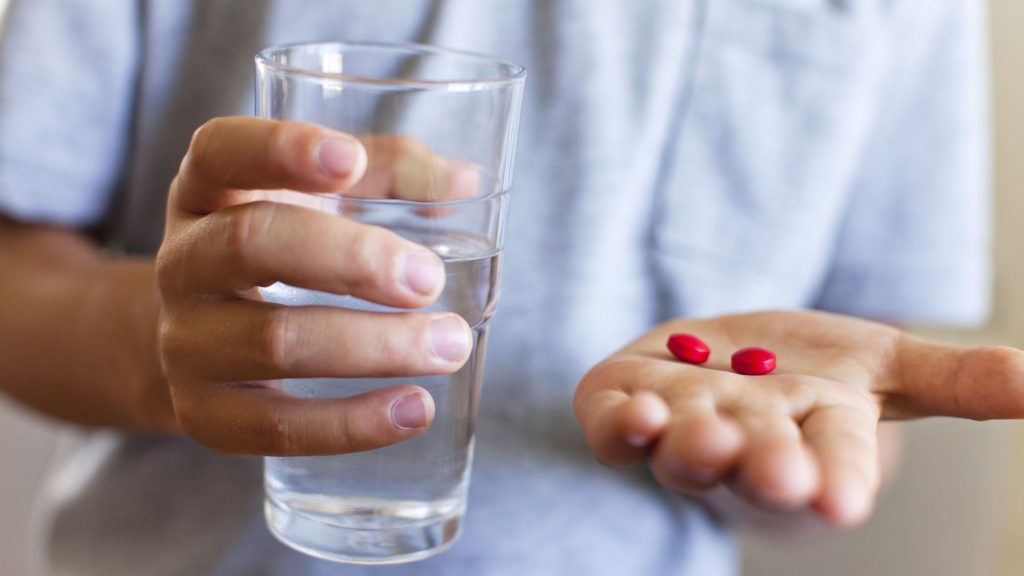
According to studies, it is optimal to take 3.75 g of GABA per day. The effect of the supplement is only felt at a dose above 2g per day. The best time to take GABA for HGH is after training and before going to bed. The duration of the cycle is 1-2 months, and after that, you can take 2 weeks of rest.
It is better to take GABA before going to bed so that this workout supplement could show its useful properties as much as possible. The effect is already visible at the end of the first week of intake, and the maximum effect can be achieved after 3 weeks.
TIP! To suppress the possible effect of serotonin (an intermediate in melatonin synthesis that suppresses GABA), it is recommended to take GABA together with 5-HTP.
According to clinical research examining the synergistic effects of GABA and 5-HTP published in [Hong et al., Life Sciences, 2016], a GABA/5-HTP mixture produced significantly greater sleep improvement compared to GABA or 5-HTP alone. The study demonstrated that GABA and 5-HTP combination resulted in significant differences in sleep patterns (40%, p<0.017) and significantly induced subjective sleep in the awake model (p<0.003). Furthermore, GABA/5-HTP mixture significantly increased GABA levels 1 hour and 12 hours following treatment (2.1 fold and 1.2 fold higher than control, respectively) and also increased 5-HTP levels. The research confirms that GABA and 5-HTP work synergistically through GABAergic and serotonergic signaling to enhance sleep quality and recovery.
When choosing specific supplements, it is advisable to look for those that contain vitamin B6, since its deficiency impairs the effects of GABA.
According to comprehensive research on vitamin B6 and GABA synthesis published in [NCBI Bookshelf, 2000], pyridoxal phosphate (PLP), derived from vitamin B6, is an essential cofactor for glutamate decarboxylase, the enzyme responsible for converting excitatory glutamate into inhibitory gamma-aminobutyric acid (GABA). Vitamin B6 deficiency leads to diminished GABA synthesis and impaired neurotransmitter function. The critical importance of this relationship became evident when vitamin B6 omission from infant formula caused widespread infant deaths linked to severe GABA depletion in the brain, resulting in seizures. Current research on adult vitamin B6 deficiency confirms that even moderate PLP deficiency results in inhibition of neuronal GABA activity, various sleep and behavioral disorders, increased cardiovascular dysfunction risk, and weakened hypothalamic-pituitary hormone secretion control.
Vitamin B6, according to current research, is a limiting cofactor of neurotransmitter levels such as dopamine, serotonin, γ-aminobutyric acid (GABA), noradrenaline, and melatonin.
The synthesis of the above neurotransmitters is sensitive to vitamin B6 levels. Moderate vitamin B6 deficiency results in inhibition of neuronal GABA activity, various sleep and behavioral disorders, increased risk of cardiovascular dysfunction, and weakened hypothalamic-pituitary control of hormone secretion.
Small doses of GABA supplementation are useless since only a small fraction penetrates the brain through the blood-brain barrier.
According to research on GABA blood-brain barrier penetration published in [Hepsomali et al., Frontiers in Nutrition, 2020], while it was long believed that GABA cannot cross the blood-brain barrier (BBB), recent evidence suggests otherwise. With the discovery of GABA-transporter systems including transcytosis, carrier-mediated transport, and simple diffusion mechanisms, researchers now recognize that substantial amounts of GABA can cross the BBB. Additionally, combining GABA with L-arginine dramatically increases BBB penetration—a rat study demonstrated that GABA alone increased brain GABA by 33%, but GABA combined with L-arginine increased brain GABA by 383.3%. This L-arginine-mediated increase in nitric oxide enhances BBB permeability, suggesting that GABA formulations containing complementary amino acids significantly improve bioavailability and CNS effects.
The best results can be achieved with the intravenous route of administration. According to studies and literature, the duration of the cycle is about one month. The duration of a break after administration is not known.
Now you know how much GABA to take for HGH increase.
GABA HGH boosters
As you may know, some of the best supplements for HGH increase contain GABA as well as other amino acids like: L-arginine, L-ornithine, L-lysine, natural extracts and growth factors. We reviewed in detail the best boosters in the form of oral sprays and tablets and capsules. We also advise you to read why even the best HGH supplements are less effective than injections and how the manufacturers are trying to solve this problem.
Side Effects and Contraindications
There are only a few side effects of GABA because the supplement is considered safe and tolerable. It even has no known drug interactions. Side effects occur when taking high doses – more than 4 g per day. These may include:
- tingling in the extremities;
- increased heart palpitations;
- rapid breathing.
Contraindications to taking GABA:
- liver disease;
- Unipolar and bipolar depressive disorders;
- kidney disease;
- pregnancy and lactation.
Since GABA causes drowsiness, you should not take it before driving or operating any equipment.
References
- [Sakashita et al., Strength and Conditioning Journal, 2019] – “Oral Supplementation Using Gamma-Aminobutyric Acid and Whey Protein Improves Whole Body Fat-Free Mass in Men After Resistance Training” – Randomized controlled trial demonstrating that GABA combined with whey protein significantly elevated resting plasma GH concentrations at 4 and 8 weeks compared to baseline. The GABA and whey protein combination was significantly more effective for increasing whole body fat-free mass than whey protein alone, establishing that daily GABA supplementation enhances exercise-induced muscle hypertrophy through improved GH secretion.
- [Powers et al., Journal of the International Society of Sports Nutrition, 2008] – “Growth hormone isoform responses to GABA ingestion at rest, after exercise, and after amino acid ingestion” – Randomized double-blind placebo-controlled crossover study of 11 resistance-trained men (18-30 years) showing that 3g oral GABA elevated immunoreactive GH (irGH) and immunofunctional GH (ifGH) at rest by approximately 400%, with AUC elevated by 375% (P < 0.05). Resistance exercise plus GABA produced 200% greater irGH (P < 0.01) and 175% greater ifGH (P < 0.05) compared to exercise with placebo. GABA ingestion elevated both resting and postexercise GH concentrations.
- [Hong et al., Life Sciences, 2016] – “Sleep-promoting effects of a GABA/5-HTP mixture” – Clinical research demonstrating that GABA and 5-HTP combination produced significantly greater improvements compared to either supplement alone. The GABA/5-HTP mixture resulted in 40% improvement in sleep patterns (p<0.017) and significantly induced subjective sleep (p<0.003). GABA/5-HTP mixture significantly increased GABA levels 1 and 12 hours post-treatment (2.1 fold and 1.2 fold higher than control) and increased 5-HTP levels, confirming synergistic effects through GABAergic and serotonergic signaling.
- [NCBI Bookshelf, 2000] – “GABA and Glycine – Neuroscience” – Comprehensive review establishing that pyridoxal phosphate (PLP), the active form of vitamin B6, is an essential cofactor for glutamate decarboxylase, the enzyme converting glutamate to GABA. Vitamin B6 deficiency dramatically reduces GABA synthesis. The critical importance became evident when B6 omission from infant formula caused widespread infant deaths from seizures due to severe brain GABA depletion. Current research confirms even moderate B6 deficiency inhibits neuronal GABA activity, causing sleep disorders, behavioral problems, increased cardiovascular risk, and weakened hypothalamic-pituitary hormone control.
- [Hepsomali et al., Frontiers in Nutrition, 2020] – “Effects of Oral Gamma-Aminobutyric Acid (GABA) Administration on the Mood and Cognition of Healthy Adults” – Research establishing that while GABA was historically thought unable to cross the blood-brain barrier (BBB), recent evidence demonstrates otherwise through GABA-transporter systems including transcytosis, carrier-mediated transport, and simple diffusion. Notably, combining GABA with L-arginine dramatically enhances BBB penetration: GABA alone increased brain GABA by 33%, but GABA with L-arginine increased brain GABA by 383.3% through L-arginine-mediated nitric oxide enhancement of BBB permeability. This suggests complementary amino acid combinations significantly improve GABA bioavailability and CNS effects.
Related Posts:


The BoostHormone Research Team is a collective of fitness researchers, nutrition specialists, and health science professionals dedicated to providing evidence-based information about hormone optimization and performance enhancement.
With expertise in sports nutrition, endocrinology, and supplement science, our team analyzes peer-reviewed research and clinical studies to deliver honest, science-backed insights. We cut through industry hype to provide the accurate information you need to make informed decisions about your health and performance.
Our mission: translate complex scientific research into practical, actionable guidance – always prioritizing your safety and long-term wellness. Read Our Editorial Guidelines.